Trust

I have been thinking about this for a whil now and spent some time noticing how I interact with a variety of people. What I have come to realise more and more is, fundamentally I just don't trust other people! 

With people I've just met I don't trust they will act appropriately, be kind, considerate, non-selfish, etc, etc. Then with people I do know (and especially since getting diagnosed) I just don't believe they are being honest towards me, not judging me behind my back, and ultimately won't let me down and just turn out to be fake. 

I hate to say it, but even with my partner to some extent. It wouldn't entirely surprise me if she said she'd met someone else because I was too much to deal with! Even though at the moment she says she's not bothered about me being Aspie.

What are other people's thoughts, feelings, experience with Trust. Is it something that comes easily or something you struggle with?

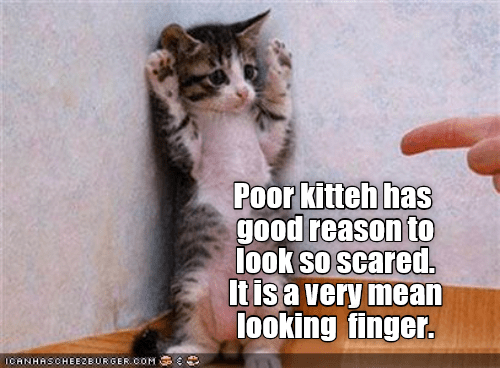
  • I was brought up with the saying, "Never trust a person who keeps cats." Upside down

  • Sometimes they are trying to keep you from leaving.

    When my cat attacks me there is a whole little ritual around it, but it's really an invitation for me to pick up a stick with a "thing on a string" or feathers and play with him.

    I must record it some time, it's rather cute..

  • My cat keeps attacking my legs. I’m gunna say it’s affectionate! Heart eyes cat

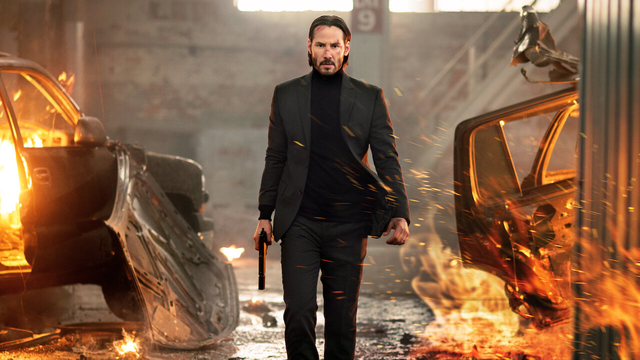
  • Love a vigilante dream, Knowing full well if it came to the real thing I’d probably just cry!

  • I do not trust ANYTHING or ANYONE totally.

    It's a numbers, context and percentage game for me. Like any other form of gambling.on an outcome.

    Cats and Machines are very trustworthy, humans not so much. 

  • A lot of thief’s are opportunists

    Yeah. I left my car unlocked on my driveway a few months ago and some scrote stole my parking meter money, shop loyalty cards and worst of all my favourite multi-tool.

    My sister-in-law video doorbell thing later caught a couple of teens? in hoodies going down her street testing all the car doors.

    It gives me all sorts of violent vigilante dreams, usually involving a cattle prod and a chainsaw.

  • My mother-in-law leaves her house and car unlocked all the time. She lives in deepest darkest Devon. I guess with that sort of thing is luck, or the lack of! A lot of thief’s are opportunists rather than guys who scope out properties for weeks on end that you see in the movies.

  • I left a massive street facing ground floor window open last night (I don't usually open it, so forgot to check it at bed time).

    Nothing bad happened - proof the world is trustworthy? Thinking

    So here are my bank details: Sort code 123...

  • I think that there are different levels of trust, and different areas that a person would be deemed trustworthy. I know that there's a common belief to completely trust somebody as if it's all-or-nothing, but I don't think that's quite right. I mean the realistic thing is to trust them with certain areas of your life. You can tell them certain things like personal matters, but you don't just give away your personal id, life savings, credit cards, and everything to just anyone.

  • Some people are just *Insert Expletive Here*

  • You’ve definitely taken the Red Pill! Sweat smile

  • Well put. I definitely see that there are layers to trusting someone. I tend to find that it takes me ages to build that trust, but moments to loose it.

  • This is something I have been conflicted over. I had an “interesting”!! childhood and that hasn’t made me trusting. I wonder if from an ASD perspective it’s more to do with not really understanding facial expressions, subtle changes in tone of voice and gesticulations. Makes it hard to understand someone’s true intentions.

  • Everywhere I've read, Autistic individuals seem to be more generous with 'trust' toward and with other Autistic individuals. There is a logic to this in spotting another who operates similar found in dependability, proven calculation of outcomes and operations of the other, and not just from an ease in conversation and relate-ability. 

    For me, Trust is used too often out of context. It is used to gaslight. It is used without respect for how it is earned. Trust is offered in degrees and can be severed in one fell swoop. We trust that drivers will stay on the correct side and maintain the rules. But what happens when they start breaking the rules (like stopping for a pedestrian when the car has the right of way). These people create 'issues' with trust. 

    Work out all the details of what trust demands. How will you allow your partner to earn your trust with your money? With your passwords? With your will? Are they willing to learn to become trustworthy or have they already proven in various ways that they cannot be relied upon. Give trust in increments (if earned). Teach others how to earn it by actively participating in earning theirs, it's a good way to structure time management, work out who is worth investing in and creating needed boundaries. 

  • Yes, I definitely think that I’ve been unconsciously masking for a long time, and that doesn’t help.

  • Here are my thoughts, Riddler.

    I think you've innocently been swept up by the myth that neurotypicals have created for themselves, namely, that people are inherently trustworthy. It's easy to see why they have this myth; it keeps their neurotypical society functioning (outwardly). They know, as we know, that people are not inherently trustworthy. The evidence to support this is overwhelming. People lie, deceive, cheat, steal as naturally as they breathe. So, if they didn't perpetuate this myth about inherent trustworthiness, their society would fold within 24 hours. Why else do they need a police force and a criminal and legal justice system?

    Trustworthiness is not an inherent characteristic. Trustworthiness is demonstrated through a person's actions and to trust someone, their actions must be consistent over time. 

    I think there is anecdotal evidence that autistic people are more likely to be inherently trustworthy, but I don't know if there is data about this. 

    Neurotypicals have the same myths about love. They think that the moment someone utters those magical three words, I Love You, then this alone is proof of their veracity. Even though everyone knows that thousands of years of evidence points to the contrary being the case. That's why they had to develop a system of legal ownership called 'marriage' to formalise these declarations of love. Marriage was a legal and public attempt to make people declare their commitment to the whole community as an extra layer of security to prevent them form breaking their commitment. Hence why they are referred to as vows within the religious ceremony. Would inherently honest creatures need to make vows to one another to demonstrate their trustworthiness? But even marriage and vows have proven to be ineffective and meaningless over time. 

    So, the presumption of trustworthiness is a faulty one. It's more realistic —at least to me—to presume everyone is untrustworthy until they have proven otherwise. That's a more realistic assumption for me. And I'm much less likely to feel hurt or angry when people behave naturally as opposed to how I am expected to imagine they should behave. 
    It's also a joyful experience when someone earns my trust. They have defied their own nature and that is something to be celebrated. 

  • I think it's interesting that you have raised this, I think it is related to autism. I'm in the process of seeking a diagnosis so I have been writing down all manner of notes, and "trust" was one of my headings! It is something I struggle with at a number of levels - perhaps because I've been too naive and trusting in the past though?

    So many times when I've taken at face value information that's been given to me and acted on it or passed it on in good faith to someone else (teacher, boss, social group...) it has backfired on me big time. Possibly in some cases there has been malice involved, I don't know, but I do think that a lot of people are just careless and don't even think about why you asked them and the consequences of giving you dodgy information. So I try to check things independently if I can and if I have to get someone else's input I try to pick the right person! People say "oh well you just have to have a little bit of faith in people" - but I do find that very hard and if most people are doing that then they must have not noticed or have forgotten how many times they've been let down!

    And If I delegate a task to someone (partner, colleague or whoever), I always over-explain and then often sort of hover over them too because I don't believe they'll do it "right"! It worries me when people say "right, sure, no problem!" and go off to do the thing and I'm left thinking, but how can you possibly know exactly what I meant when you didn't even let me finish never mind explain in minute detail!

  • My wife thinks I trust a little too easily - it stems for me from my strongest moral: treat others how I want to be treated.

    I'm not saying I leave my door unlocked and believe everything I read on the interweb, but I intentionally try and see the good in people until it's proved otherwise.

    PS: No - you can't have my bank details.