


In a world that is becoming ever more vicious, other than avoidance how do you defend yourself (your welbeing) in no violent ways?
In a world that is becoming ever more vicious, other than avoidance how do you defend yourself (your welbeing) in no violent ways?

Pietro, I'm uncomfortable with this extreme Christian stuff, so I will be leaving this conversation.

I mean the double standard that if men behave that way they are castigated. Its a loophole open to exploitation (by satan ;).
Whats Satan's horn?
Sometimes jostling on place like trains is unavoidable.
I’ve had women rubbing themselves up against me on trains I am not really a fan of this. In the past I have received quite a lot of female misogyny, which I see as women holding Satans horn. When women think all men are the same that is the end of the world.
I’ve always seen myself as a pacifist (any kind of unwanted contact is violence, I would definitely refuse to go to war. I’m quite street wise, I wouldn’t class myself as working class but if someone is confrontational I can give it back.
I don't mind being touched, it depends on who, when and why, if someone jostles me me first thought is, "Are my bag and purse safe?" Obviously there are some people who stand to close on purpose as a means of intimidation, I've taken to doing what my Mum does and swingling round sharply with a slightly extended elbow and then appologising for hurting them.
I avoid being in crowded places, so I don't get to much aggravation, although I do get quite a few comments, like short old men calling me Sir, even though it's obvious I'm female. I was talking to a lady in the local shop who's a bit taller than me and she gets it too, there's quite a bit of hostility towards tall women.
I suppose one advantage of my working class background is that I learnt to answer back early and very well, I'm not easily physically intimidated either.
Exactly This is why you have to protect yourself. Its a form of abuse. Anyone who reads this probably thinks that I am nuts, because they trust them. lol.
I am just going to post this even if it sounds like bonkers paranoid balony I don't fully understand the science yet but I know that its real.
That thing people do why they swing their arms at you or rub up close to you. I really dislike being overly close to people I don't know, a love. Your essence
Maybe this is the main difference between ebergy vampires and me. A because I don't want to be friends, B because I don't like being close to people without good reason.
I'm noticing a lot more female energy vampires.
In the 1980s there a lot of films warning what was going on, The Dark Crystal, Lifeforce, later Warcraft, more recently I think also social media and phones have the ability to tap you or at least your personal preferences and inspirations. Unless you wear dark sunglasses.
Or its just mind games being played. I may delete this later, I am hoping for some clarity from anyone.
Really the question might be do you feel you need protection? If you feel threatened. The ideal scenario would not to be in any position where you feel like you need to cover your ears or eyes.
Do you mean that you feel surrounded by energy vampires? If so, the concentrate on making yourself taste bad, if I'm around an energy vampire I concentrate on emitting an "energy smell" like the bottom of a bin on a hot day, they soon go away then.
It is the one thing that seems to stand out, almost as an identifier. When I first started reading about things after diagnosis 'Special' makes it sound a bit weird. But then I remembered things which consumed me for long periods, and still do, so really it is a passionate interest.
I tend to look at things head on, the whole machine not just the cogs. I also do tend to see the best in people once I know them fairly well, although generally I would say if I am thinking in nt/nd terms as I am lately I don't feel nts are meeting anything like in the middle. Should I teach them my ways if all they are going to do is strip them and then carry on in the same direction? This is the sharing (if I know they are uncaring) dillema also in giving as an asd person you have to trust everyone in the group. Having a shared discipline could be helpful in this scenario, as long as there are no rogue players. I would join a group of similarly minded people but I despise banter or knowing that one person could try to derail things. I think total group harmony is a fantastic thing like a flock of starlings.
pietro_21 maybe quick fixes are often a result of a "top down" approach. The best martial arts I have encountered explore the intersection between top down and bottom up approaches to things. Being a very "bottom-up" thinker myself these days I have found it helpful to explore meeting in the middle! How we perceive others behaviour and interact with it can change if we all meet in the middle more. :-)
I reckon the special interest bit about self defence and autism comes from experiences of being different.
Then there's that long journey of self discovery as to who one actually is that one is trying to defend - especially if there is an absolute upheaval in terms of seeing oneself post diagnosis from a very different perspective...
Instead maybe dream of sunflowers and other golden means :-)
Yep, pietro_21 :-)
hehe standing on one leg in search of enlightenment (like my leg hurts why don't I use the other one...) or why am I holding this stick?
Lots of tribes out there - think there was a book about autism that mentioned it
as regards looking at the number of sides - why stop at 2?
Recently have found the Fibonacci sequence rather fab , 0, 1, 1, 2, 3, 5, 8, 13 etc
All rather lovely :-)
I hate the idea that other people are tapping into my energy or identity. Its best to keep them on their toes.
I am getting the feeling we landed somewhere near to a special interest. Where I live in London there are more people taking up Shinto type martial arts. Standing on one leg with a stick  I can see thats why people do this to join a group its a sort of tribal awareness.
When human beings are hard wired to think a certain way they lose awareness of so much.This is part of our struggle because we can see both sides, the normal and the diverse.
This compared with "Eastern" martial arts where:
| Philosophy | Approximate Age | Key Contribution to Martial Arts |
|---|---|---|
| Vedic/Hindu | 3,100–3,700 years | Concept of vital points (marma) and internal energy. |
| Taoism | 2,400 years | Flowing movements, "soft" techniques, and natural harmony. |
| Confucianism | 2,500 years | Moral conduct, hierarchy, and societal duty (Bushido roots). |
| Zen Buddhism | 1,500 years | Mental stillness (mushin), resilience, and meditation in action. |

and
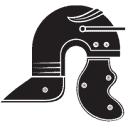 www.roman-britain.co.uk +1
 Twinkl +1
 Martial Arts Stack Exchange +5
 Wikipedia +6
 traditionalsportsgames.org +6
| Category | Core Techniques | Primary Focus |
|---|---|---|
| Armed | Longsword slashing, spear thrusting, javelin throwing, shield bashing | Reach and mobility |
| Unarmed | Grappling, tripping, "scuffling" | Throwing/pinning the opponent |
| Tactical | Guerrilla harassment, headlong "furious" charges, chariot-leaping |
Here's what google AI says about post late medieval TheCatWoman
 Reddit +4
 University of Aberdeen +3
 Wikipedia +1
 Wikipedia +2
 Reddit +1
 Reddit +1
 Quora +1
| Master | Work | Philosophical Focus |
|---|---|---|
|
Zettel
(c. 1389) |
Holistic system of martial virtue and "Common" vs. "Scholarly" fencing. | |
| Fior di Battaglia (c. 1409) | Emphasis on the "Four Virtues" of a master: celerity, courage, audcity, and prudence. | |
|
Jerónimo de Carranza
|
De la Filosofía de las Armas
(1569) |
Defined fencing as a philosophical and mathematical discipline. |