


In a world that is becoming ever more vicious, other than avoidance how do you defend yourself (your welbeing) in no violent ways?
In a world that is becoming ever more vicious, other than avoidance how do you defend yourself (your welbeing) in no violent ways?
Simple question pietro_21 on a complex topic.
As you highlight avoidance is best however a hermit like existence is not a practical solution.
Violent self-defence MAY have some legitimacy however for obvious social reasons is non-sustainable both for individuals and society. As a bit of a disclaimer here for my background I trained for many years in martial arts including being awarded 2 black belts.
So then the issue of defending ones well being from a more complex level than that of physical harm from the obvious forms of attack.
I can give my perspective upon this that I think the answer may be in exploring further too.
Seeking support from others to defend one's own well-being is an important key.
This was something of a seed-change for me to acknowledge as implicit in understanding of my own vulnerability.
Support from others I was very fortunate to have, developing this to be less necessary took a lot of tenacity and energy to do - especially since it takes time to discern who and/or what and/or when works in this respect.
I would say that before I could defend my well-being I also had to gather insight into what well-being might actually be for me - especially since I was coming from a strong sense of "unwellness" that I had lived with for many years
To get to this point required developing skills of analysing my own body for signs of health beyond those of "normal" physical health into gaining "interoception" of correlates with mental states that my body gives insight into. This then developed into the capacity of increased self-monitoring and self regulation.
I guess what I am saying is that we need help to identify what it is we are missing and from lived experiences work towards strategies that we self generate to be "new" people.
For me it was recognising how my posture, how I breathed etc and from this how such physical frameworks correlated with my mental framework too.
This is the domain of linking the body with the mind and the emotions (and dare one say it the spirit too). There are many therapies that explore this. They aren't easy but by my evidence they can be learned.
I believe this helps defend well-being by establishing what it was in us that is resonant with a sense of health and personal values.
I find people who I have known who studied martial arts have a lot of discipline when it comes to emotional control.
my issue may be forgetting the practical element and looking for a quick fix, even though I follow routines it is my own dissatisfaction at the results, or others behaviours that leads me to states like this.

I think maybe we need to redefine our relationship to the word DISCIPLINE, its not crime and punishment, well it can be, but it's more about training yourself into good habits, which is why people who've studied martial arts can come across as well adjusted, partly its having an outlet for negative emotions, theres nothing quite like a session with a punch bag or kick pads for releasing tension and partly it's because I think it teaches you to see the insecurities and weakness of others and of course knowing you can physically defend yourself helps too.
Yoga or tai chi are disciplines, study is a discipline, music is too, it's anything that you set aside time for, regualarly and don't allow to be disrupted.
It is the one thing that seems to stand out, almost as an identifier. When I first started reading about things after diagnosis 'Special' makes it sound a bit weird. But then I remembered things which consumed me for long periods, and still do, so really it is a passionate interest.
I reckon the special interest bit about self defence and autism comes from experiences of being different.
Then there's that long journey of self discovery as to who one actually is that one is trying to defend - especially if there is an absolute upheaval in terms of seeing oneself post diagnosis from a very different perspective...
Instead maybe dream of sunflowers and other golden means :-)
Yep, pietro_21 :-)
hehe standing on one leg in search of enlightenment (like my leg hurts why don't I use the other one...) or why am I holding this stick?
Lots of tribes out there - think there was a book about autism that mentioned it
as regards looking at the number of sides - why stop at 2?
Recently have found the Fibonacci sequence rather fab , 0, 1, 1, 2, 3, 5, 8, 13 etc
All rather lovely :-)
I am getting the feeling we landed somewhere near to a special interest. Where I live in London there are more people taking up Shinto type martial arts. Standing on one leg with a stick  I can see thats why people do this to join a group its a sort of tribal awareness.
When human beings are hard wired to think a certain way they lose awareness of so much.This is part of our struggle because we can see both sides, the normal and the diverse.
This compared with "Eastern" martial arts where:
| Philosophy | Approximate Age | Key Contribution to Martial Arts |
|---|---|---|
| Vedic/Hindu | 3,100–3,700 years | Concept of vital points (marma) and internal energy. |
| Taoism | 2,400 years | Flowing movements, "soft" techniques, and natural harmony. |
| Confucianism | 2,500 years | Moral conduct, hierarchy, and societal duty (Bushido roots). |
| Zen Buddhism | 1,500 years | Mental stillness (mushin), resilience, and meditation in action. |

and
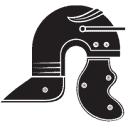 www.roman-britain.co.uk +1
 Twinkl +1
 Martial Arts Stack Exchange +5
 Wikipedia +6
 traditionalsportsgames.org +6
| Category | Core Techniques | Primary Focus |
|---|---|---|
| Armed | Longsword slashing, spear thrusting, javelin throwing, shield bashing | Reach and mobility |
| Unarmed | Grappling, tripping, "scuffling" | Throwing/pinning the opponent |
| Tactical | Guerrilla harassment, headlong "furious" charges, chariot-leaping |
and
www.roman-britain.co.uk +1Twinkl +1Martial Arts Stack Exchange +5Wikipedia +6traditionalsportsgames.org +6| Category | Core Techniques | Primary Focus |
|---|---|---|
| Armed | Longsword slashing, spear thrusting, javelin throwing, shield bashing | Reach and mobility |
| Unarmed | Grappling, tripping, "scuffling" | Throwing/pinning the opponent |
| Tactical | Guerrilla harassment, headlong "furious" charges, chariot-leaping |
It is the one thing that seems to stand out, almost as an identifier. When I first started reading about things after diagnosis 'Special' makes it sound a bit weird. But then I remembered things which consumed me for long periods, and still do, so really it is a passionate interest.
I reckon the special interest bit about self defence and autism comes from experiences of being different.
Then there's that long journey of self discovery as to who one actually is that one is trying to defend - especially if there is an absolute upheaval in terms of seeing oneself post diagnosis from a very different perspective...
Instead maybe dream of sunflowers and other golden means :-)
Yep, pietro_21 :-)
hehe standing on one leg in search of enlightenment (like my leg hurts why don't I use the other one...) or why am I holding this stick?
Lots of tribes out there - think there was a book about autism that mentioned it
as regards looking at the number of sides - why stop at 2?
Recently have found the Fibonacci sequence rather fab , 0, 1, 1, 2, 3, 5, 8, 13 etc
All rather lovely :-)
I am getting the feeling we landed somewhere near to a special interest. Where I live in London there are more people taking up Shinto type martial arts. Standing on one leg with a stick I can see thats why people do this to join a group its a sort of tribal awareness.
When human beings are hard wired to think a certain way they lose awareness of so much.This is part of our struggle because we can see both sides, the normal and the diverse.
This compared with "Eastern" martial arts where:
| Philosophy | Approximate Age | Key Contribution to Martial Arts |
|---|---|---|
| Vedic/Hindu | 3,100–3,700 years | Concept of vital points (marma) and internal energy. |
| Taoism | 2,400 years | Flowing movements, "soft" techniques, and natural harmony. |
| Confucianism | 2,500 years | Moral conduct, hierarchy, and societal duty (Bushido roots). |
| Zen Buddhism | 1,500 years | Mental stillness (mushin), resilience, and meditation in action. |
