i really need some advice on High functioning aspergers please

I have a 19 yr old daughter whom I think may have HFA. There have been many quirks to her personality over the years, but most importantly and disabling is her inability to manage social situations. She has lost all but two friends from her school and college years, she tried to start uni this year, and this resulted in one panic/meltdown when she tried to move into her student digs. We came home and she continued to insist she would go, but a week later after attempting the first day she had another almighty panic/ meltdown. We brought her home, there has been no backlash to this, no emotion, disappointment, frustration anything!!! i truly believe she does not know how to understand herself and her feelings, as there was little conversation about going away, just a build up of anxiety a few weeks before ( but this was only evident by a few panic attacks). She has been put on AD for her anxiety, she watched the Chris Packham docu, and told me two days later that she felt she connected with everything he spoke about. I did my research, and feel she has many traits and the GP asked her to complete a questionnaire.We go back to GP tomorrow, and I'm just lost as to how to pursue this? It's all very new to me, and im worried the GP may dismiss our concerns as we have never raised any issues beforehand. to be honest, I thought many of her traits were things she may just grow out of, or gain confidence once at uni??? is there anything i should be doing that i simply don't know about, anyone out there on this forum who has had a similar experience? if someone thinks we are barking up the wrong tree , please say. The GP test was a score of 40/50 autism spectrum quotient test. Thank you

MOM

  • Thanks for the book recommendation. I will look out for this.

  • Thanks. Luckily the uni is one that we visited twice before and that she was accepted into last year , only deciding to have gone for the other option. Your advice on becoming familiar with the building and campus etc is something I have already discussed with her, even trying out the bus route together. I will however investigate the support services on offer and I was not aware of the disabled student allowance, so I shall look into that . My thinking is, that if she isn't given a formal diagnosis for whatever reason, the social issues and the impact of change are still going to be a major barrier. We will definitely need a plan  going forward. 

  • Hi,

    I echo others advice about you and your daughter putting a document together about how she meets the different diagnostic criteria for autism. It does help to be pushy. I mentioned I thought I had autism to a Dr and 2 psychiatrists and they all said I wouldn't have ASD! Luckily the third one gave me the screener questionnaire which I filled in and sent to the local autism unit, which led to my diagnosis.

    In regards to your daughter's transition to uni the good news is it that you have around 10 months to prepare. You could spend this time getting your daughter comfortable with the campus, such as going to their food outlets for lunch occasionally, walking around the campus etc. Have you been in touch with their disability services about your concerns? They may be able to help, such as finding your students lecture rooms in advance so that she can go and sit in them in the summer to familiarize herself with them. you might also be able to join the library as a guest and obtain past papers for any exams for her course.

    If your daughter applies for the Disabled Students Allowances, either as a student with MH issues or ASD, she may be entitled to mentoring support.

  • Wow, brilliant reply thanks. I have lots of reading to do during 2018. 

  • I have recently done this whole A.S. test thing and went from 32 denial to about 45 honest. I am 51 and I am finding it a gradual process to adjust all my thinking and behaviours but it is worthwhile as I have at last found peace and mental order. I have done the G.P. bit and I am awaiting assessment. The 50 questions can provide structure to help one adjust to what one is anyway. Your daughter needs to come to terms with this situation and this condition. that's hard because society programmes you into normal thinking. get the book by An Adult with an Autism Diagnosis Gillan Drew (Author) . I found this book wow. But the most important thing is your daughter has to own the condition and her new life because this condition shapes the way you think and behave and there is no escape from that. the reaction of society is mostly not positive either. So use your parent skills to coach her into the path that she finds is right for her. Each person has their own Aspergers skin. Your daughter has to find hers. Educate yourself and then work with your daughter at her pace. Society in general does not deal with this at all because there is an overwhelming urge to conform and fit in. There are no easy answers and no quick solutions as life is a journey. Assessment and diagnosis is simply the beginning of something new.

  • Hmmm......interesting. i did do the test myself, i scored 15. its a starting point i guess, but there are many layers to be explored. Thanks.

  • Thank you to everyone who has replied - this morning the GP said that she will be referring her for the assessment. My daughter went with notes this time, (thanks seekeraftertruth!)  and she was able to explain her concerns in more depth. Whatever the outcome, both of us have found a new community with a whole new info . Truly appreciated.

  • I'd just like to say good for you, for helping your daughter with this. I can't help with the GP stuff as I was disgnosed privately, but as with your daughter there were a number of things that I read/watched that lead to a lightbulb moment and then on to the day that explained my whole life to date. I have Aspergers.

    I don't dwell on not knowing sooner (I am in my 40s) but certainly do recognise that if I had know at your daughter's age, a lot of things would have been easier for me and there are certainly some things that I would have done differently, or not done at all. What I am trying to say is good for you, it is a positive thing, knowing ... for example if your lass understands where her anxiety is coming from, she may well find it easier to manage. 

    Best of luck to both of you, and I hope you are able to get some answers

  • That's great to hear! It's great that she has you to help her get the support she needs.

    The provision for autism in adults can be quite different from that for children - as is the case for many disabilities/disorders, once you get to adulthood the NHS funding seems to disappear. Also, autism care is done by different providers in each county in the UK, so the level of support can differ. Read around the subject and discuss things with your daughter - if you're both sure she has it then stand your ground and don't accept no for an answer. For myself, I know 100% that I have it but my initial diagnosis came back "not really sure" because my mum didn't notice any quirky things from my childhood and I had friends. I was invited back for a second interview to discuss it, and I provided more evidence, did some visual/maths tests, and suggested they speak to my sister instead, before they came back with a "yes" (we had a good laugh at the things my sister remembered!). I didn't settle for a "maybe, not sure" because I know 100% that I have it. I went the extra mile because it was important to me to get the diagnosis.

    When I took another family member for assessment, for which I think they present clear indications, the specialists didn't take it any further because my family member wasn't having severe difficulties at the time, which I agree with so we didn't push for it. So, my point is, if you're certain, and you think the diagnosis would help as it could unlock some support for your daughter, keep pushing until you get it.

    It's okay to go for further assessment or second opinions - remember that you know your daughter better than they do, so make sure you can gather and present the evidence that would help them make their decision. This would be of the form of things she struggled with when she was little, any speech or developmental delays, friendships and social groups, routines, what would cause meltdowns or what would cause calmness. Note that whilst people with autism share many traits, we're all different and it's a spectrum condition, so some people might have had late development and few friends, and others might have had accelerated development for some things, and a circle of friends, so it might be useful to just categorise your evidence but don't worry if you have nothing for certain categories - it just means that your daughter had no obvious difficulties with that particular thing.

    Hope that's useful.

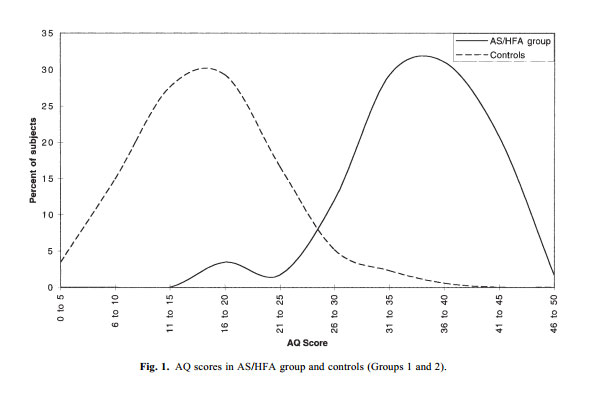
  • Seconding Robert123 and seekeraftertruth, you might find that these curves help provide some context for your daughter's AQ score:

  • thankyou, that is a great help. I've just felt helpless as the GP did give us that blank stare when it was mentioned, I will take your advice and drive this myself so that we can get an assessment done. Quirks were probably the wrong word to have used :-) you have been very determined, and I intend to take that on board. 

  • Hi. I'd give you two pieces of advice.

    1. Your GP might not know much about autism, mine didn't. But, they're not going to be the ones treating your daughter - the autism specialists are. Just be firm and get your GP to do the referral to your local autism provisioner. That's all your GP needs to do - they just need to do the referral, nothing else. They're more likely to say "okay sure" if they know you won't be coming back every day with problems. Don't leave until you get the referral made. Then the experts will handle it from there and they deal with you directly.
    2. Your daughter is who she is. She won't grow out of 'quirks', these are just as much a part of her as her eye colour and her height. She will grow as an adult, but part of that is also letting her understand who she is, and who she can be, and what she needs to function best in our world. Let her be who she is - she won't change just because society is telling her to. Support her, quirks and all, in being who she is.

    For point 1, I went to see my GP initially, and told her why I thought I had autism, she just looked at me blankly. So instead, I found out from my county's autism provider exactly how to 'get in', and they said it's only by referral from the GP. So I wrote a 6 page document detailing why I think I have it, completed the referral form myself, then booked a second appointment with my GP and said "I think I have autism, I realise you probably don't know that much about it, but I need you to make the referral to the county provider, here's their address, and here's my evidence and my completed form, please sign it and send it off". And she just took it and said "okay", and sent it off. Make it easy for them!

  • Thanks Robert123. She has applied for a local uni , with the view that she could remain at home. Currently, I don't think she is able to even manage that level of "change " ( mainly other students rather than the course). I'm hoping some professional support with this might help. As a parent I still feel lost with this , thank you for replying 

  • Well... I can emphasise with your daughter.  Being quirky, I was described as quirky only a few days ago.   Panic attacks, I avoid situations that trigger them.   Social situations again avoid specific ones that I don't understand.

    Friends, very difficult.

    As for university life, i suggest she and you should find out what help is available at the specific institution in question.