How can we promote engagement?

At my wits end. 

Our son (23) lives like a hermit, rejects all offers of help, refuses to engage with services and disgrees that he is autistic.  As he is deemed to have capacity, it seems that there is little help we can enlist.  

Can there be a way through?  Is there anything we can do apart from generally being supportive and available whilst providing a fairly decent environment here at home?  I feel as though we're living in some kind of holding bay here, waiting for a mythical Spring to come in which our son decides to actually come downstairs and talk to us.  

It's now been years.  :(  

Parents
  • I suppose he eats.

    Ask him to make his own food.  Or go out and do his own shopping.

  • Yes, he actually does this.  A small but vital area of independence.

    He pops to the local co-op to top up what he gets in our weekly online shop.  Generally he cooks his own meals either during the night or when we're not around, although (as an act of caring) I do sometimes leave out special prepared meals for him that I know he'll like.  He won't come into the kitchen if anyone else is there and, if, for example, I'm coming up the stairs just as he's coming out of his room, he hastily goes back in there until he's sure I've gone.  :(  He also does his own washing, again during the night when there's nobody around.  

    His meals are always taken back to his room, even though we often invite him to eat with us or, say, watch a film or share a takeaway.  He occasionally asks me a question about food or shopping but is generally halfway back up the stairs, so's to indicate he doesn't want a long answer.  If I try to initiate a conversation, the door is closed and he either doesn't respond, as if conversation is actually painful to him, or he answers monosyllabically.  I keep things warm and friendly and will continue to invite him, but it feels as though he sees us as the enemy or else for some other reason needs to shut us out.  

    He has no friends (all eventually stopped coming round when he refused to go out), no courses or classes, no job or any other activities outside the home. 

    I'm also concerned that his benefits will be discontinued as we have no recent corroborative evidence.  He ignores all letters from dentists and GPs, has very poor self care (i.e. very mucky, in spite of washing his clothes as he never washes himself) and doesn't clean his teeth. 

     I'm finding it very hard to live like this.   How can I encourage more interaction or activity?   Services won't help because, of course, he would have to request it himself.   

  • Has your son ever had pets he was close to? When I withdrew from my parents I spent lots of time with the family dog. Getting a pet might not be practical of course. I'm also wondering if your son uses text or email. Sometimes that is easier than talking. Could any of his former friends be encouraged to reach out to him again?

    What you are doing for your son sounds so caring (leaving out meals he likes is a loving gesture). It must be so hard not to be able to communicate with him in other ways. It may just be a question of time. Something might suddenly click into place and change things. This happened with one of my former neighbour's sons. 

    When I was shut away in my room in my late teens my mother would spend ages encouraging me to come out. A psychotherapist friend of the family told her to ignore me - I can remember being really upset about this. I was not playing games, I was extremely distressed and I did not understand why, or what to do about it.  

    Does your son know about your own autism diagnosis? I'd be tempted to try and talk to him about this in some way. Perhaps you could write him a note or a letter? If you have not already done so you might also want to see what advice the NAS helpline people have to offer.

    Do take care. 

  • Thank you.  Yes, it will relate to what it all means to him and unfortunately, after some bad experiences with the early intervention in psychosis team (who tried various approach over a period of over 3 years but then discharged him on the basis that there was no evidence of any mental illness, just a condition, namely Asperger's), he wants nothing more to do with services. 

    He sees them as having an agenda that they want to impose, one which includes labelling him and either injecting him with meds or compelling him to take them himself under threat of hospitalisation.  He mistrusts them and has, in the past, described them as haing "false helping demeanours."  He also sees meds as interfering with his natural energies and preventing him from healing himself  - a point which I understand but which seems to me to be lost when he clearly isn't healing when left to his own devices.  From my perspective, he's simply reinforcing and perpetuating some very self defeating and isolating behaviours. 

    I did think it advisable to give him some space and time to self heal in whatever ways he felt approapriate and also to support him emotionally and financially with any kinds of alternative healing he chose to seek.  But he rejects all offers, says that only he understands and that he's absolutely doing what he can.  And, as the years go by, it becomes more obvious that we're not getting out of this situation any time soon.  :(

    If he is invited to a DWP interview and actually goes along he'll probably insist that he's OK, in the belief that this will make them go away.   Well, actually it probably will make them go away but he'll get no money and this will worsen his (and our) position in the world).  

  • Oh Jenny this is so very difficult. I wonder what getting a diagnosis means to your son and why this seems to frighten him so much? Unfortunately in our society the deficit model of autism is very prevalent. I'm longing for an ASD diagnosis to make sense of my life but I'm also aware some people will see this as a stigmatising label and may use it against me.

    In a sense it's probably easier for me seeking diagnosis at the age of 58 than it would have been when I was your son's age. I've lived most of my life now and a diagnosis isn't going to limit future possibilities to any great extent. I've got an established identity although that's undergoing significant revision at the moment.

    In a sense it's irrelevant whether or not your son accepts the label of autistic. It's a social construction anyway. The main thing is that, if he is autistic, he finds ways to feel good about himself and comfortable in the world. That's what I was thinking about in terms of your diagnosis. It might help him to see that this can be a positive thing. 

    Mind you, having read about the huge barriers autistic people face accessing mainstream mental health services I can see practical disadvantages of having the label too. It does sound like he's experiencing depression.  

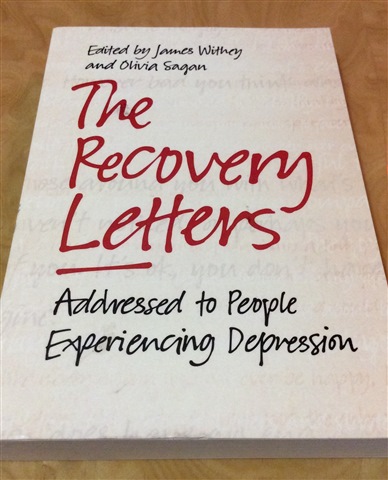
    Wish I could help. Try not to give up hope. I sometimes find it helpful to read accounts of recovery like the ones in this book:


Reply
  • Oh Jenny this is so very difficult. I wonder what getting a diagnosis means to your son and why this seems to frighten him so much? Unfortunately in our society the deficit model of autism is very prevalent. I'm longing for an ASD diagnosis to make sense of my life but I'm also aware some people will see this as a stigmatising label and may use it against me.

    In a sense it's probably easier for me seeking diagnosis at the age of 58 than it would have been when I was your son's age. I've lived most of my life now and a diagnosis isn't going to limit future possibilities to any great extent. I've got an established identity although that's undergoing significant revision at the moment.

    In a sense it's irrelevant whether or not your son accepts the label of autistic. It's a social construction anyway. The main thing is that, if he is autistic, he finds ways to feel good about himself and comfortable in the world. That's what I was thinking about in terms of your diagnosis. It might help him to see that this can be a positive thing. 

    Mind you, having read about the huge barriers autistic people face accessing mainstream mental health services I can see practical disadvantages of having the label too. It does sound like he's experiencing depression.  

    Wish I could help. Try not to give up hope. I sometimes find it helpful to read accounts of recovery like the ones in this book:


Children
  • Thank you.  Yes, it will relate to what it all means to him and unfortunately, after some bad experiences with the early intervention in psychosis team (who tried various approach over a period of over 3 years but then discharged him on the basis that there was no evidence of any mental illness, just a condition, namely Asperger's), he wants nothing more to do with services. 

    He sees them as having an agenda that they want to impose, one which includes labelling him and either injecting him with meds or compelling him to take them himself under threat of hospitalisation.  He mistrusts them and has, in the past, described them as haing "false helping demeanours."  He also sees meds as interfering with his natural energies and preventing him from healing himself  - a point which I understand but which seems to me to be lost when he clearly isn't healing when left to his own devices.  From my perspective, he's simply reinforcing and perpetuating some very self defeating and isolating behaviours. 

    I did think it advisable to give him some space and time to self heal in whatever ways he felt approapriate and also to support him emotionally and financially with any kinds of alternative healing he chose to seek.  But he rejects all offers, says that only he understands and that he's absolutely doing what he can.  And, as the years go by, it becomes more obvious that we're not getting out of this situation any time soon.  :(

    If he is invited to a DWP interview and actually goes along he'll probably insist that he's OK, in the belief that this will make them go away.   Well, actually it probably will make them go away but he'll get no money and this will worsen his (and our) position in the world).