Confused of Anglesey

I frequently confused and I'm not afraid to admit it, lots of people seem to think being confused is a bad thing and should be hidden, but if we pretend we understand when we don't  are we not in more danger of being misunderstood and confused? Why is saying, 'I don't know?' such a bad thing?

  • I've found that people all talk over each other, I was broughto up to believe that a conversation was one person speaks the others listen and then someone replies.

    I'm amazed at how many people don't cover thier faces when coughing or sneezing, you'd think people would of learned after covid?

  • how about farting in public?

    Avoid at all costs. I've seen people beaten up for this in Scotland as it can be taken as an insult (as in "you fill me with the urge to deficate") which less civilised people can take umbrage with.

    Aside from anything else, sharing the contents of your colon (even the gaseous kind) is unpleasant in the extreme.

    Please don't do it.

  • Thanks

    not the philosophy that put me off.

    it was the descent into madness bit I think!

    hehe should have stayed with it for the happy ending 

    I do recall the beer can aluminium for shims principle tho' and still sometimes apply it to this day.

  • I've started to read "Zen and the art of motorcycle maintenance" a few times.  

    never got thro' it

    That is because it is a phillosopy book more than a motorbike book - it charts the main characters descent into madness and how his son saved him.

    The narrative intertwines their travel experiences with deep philosophical discussions about the concept of Quality, exploring themes of technology, values, and the nature of existence.

    It isn't easy reading as it challenges you but if you can keep an open mind it does encourage reflection on these values from your own perspective.

    It was an important book for me at a pivotal time in my life, but they never had to deal with a worn cam shaft even once - just bad writing Wink

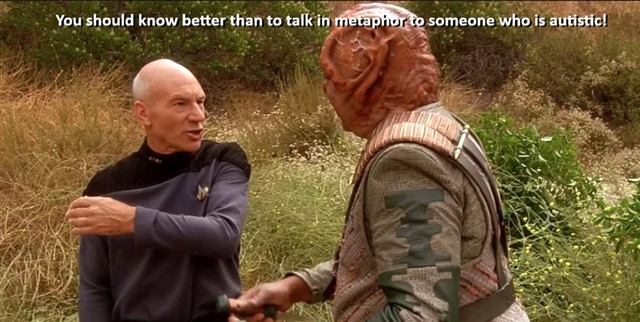
  • Please excuse my "overhearing" and joining in with something suitably autistic I think.

    I've started to read "Zen and the art of motorcycle maintenance" a few times.  

    never got thro' it

    :-)

  • Can you explain what your special interest is?

    Japanese motorbikes from the 1960s to 1980s - I used to restore these and there wasn't much I didn't know about them from the engines, carburation, electrical, suspension and braking systems.

    I worked in a bank head office and became the go-to person for people who had (or wanted) a motorbike but having a conversation about them was difficuly as they would want to talk about the colour of their desired Ducati while I was trying to point out the problems with high maintenance, terrible electrics and a riding position that would give them a bad back.

    We would see things very differenty and having a conversation would be challenging. When they bought the bike and the engine started knocking, the electrics burn out and they wanted different handlebars to sort the back problems they had then they would come to me.

    All this was pre-internet days so my knowledge was built on books, magazines and lots of hands on experience.

    Another special interest is time travel sci-fi. My interest stems from my degree in Applied Physics and I became fascinated by the paradoxes of time travel but the lingering potential for it to actually happen. Trying to explain it to a layman was only ever going to confuse the heck out of them, espcially when there were issues of multiple realities spliting off from making different decisions.

  • Can you explain what your special interest is? I can't. Yes, I have a day job in IT, I have an orchard and pick pears, peaches, plums and apples. I have a woodshop and I make furniture on occasion.  There's not a plumbing or electrical problem in my house that I cant fix (or those of my neighbors who know me as mr.fixit).  I spent over a decade as a broadcast engineer and can build and/or rebuild most radio equipment (although I have let my ham radio license expire).  For the life of me if I had to name my special interest, its finding joy in doing anything I can with my mind and my hands at my own pace, in my own time.

  • Ok... so I gotta ask... cuz I've had the 'you don't know social rules' thing thrown in my face enough times. And of course... at that point I was nerd-sniped and had to go look them all up (thank you gpt-oss-120b).  And after looking at the list, I think people make up 'social rules' on the fly whenever its convenient... for example... go google the 'norm of reciprocity' social rule... you can bend that one to fit nearly anything... and people do!!

    So which ones trip us up (or add to the list... inquiring minds want to know)
    # Unwritten rule What it looks like in practice Why it matters (psychological / social) Cultural variations
    1 “Give and take” (turn‑taking) In a conversation you let each person speak before you jump in. In a meeting you don’t dominate the floor. Reduces conflict, signals respect, keeps the flow of information. In some cultures, “speaking first” is a sign of authority; in others, a very long monologue is expected in a leader’s speech.
    2 “Personal space” You keep a 2‑to‑3‑foot distance when walking past someone. In a crowded train you don’t push or lean heavily on others. Prevents physical discomfort and perceived aggression. East Asian cultures often have tighter personal‑space norms; some Western cultures allow a larger “social bubble.”
    3 “Punctuality” Arrive a few minutes early for a meeting or dinner. Shows respect for others’ time, builds reliability, signals social competence. In many Latin American and Middle‑Eastern contexts, a more relaxed “tardiness” is tolerated.
    4 “Apologize even when not at fault” Saying “sorry” when you bump into someone, or “I’m sorry you’re upset.” Maintains harmony, lowers defensiveness, signals empathy. Some collectivist societies value group harmony over individual correctness, making apologies more frequent.
    5 “Do not interrupt” Let the speaker finish a sentence before you answer. Allows the speaker to fully express thoughts, shows respect, improves listening. In some high‑context cultures, interrupting is a way to signal interest or authority.
    6 “Cover your mouth when you cough or sneeze” Use a tissue or your elbow. Prevents disease spread, shows health‑consciousness. Universal, though the enforcement level varies (e.g., “hand sanitizer” in some offices).
    7 “Use polite language (“please,” “thank you”) Asking for something with “please” and acknowledging help with “thank you.” Signals respect and reciprocity, creates a positive social climate. Some languages have more elaborate honorifics or politeness markers (e.g., Japanese keigo).
    8 “Keep your phone out of sight while someone is speaking” Put your phone on silent and set it aside in a meeting. Signals that the other person’s words are more important than your device. In many cultures, a phone‑free rule is strictly enforced in formal settings; others are more tolerant.
    9 “Offer your seat or help to those who need it” Giving up your seat to an elderly person or a pregnant woman. Communicates care for vulnerable group members, reinforces social hierarchy. In cultures that value hierarchy (e.g., many Asian societies), offering a seat is a sign of deference to seniority.
    10 “Back‑handed compliments “You’re surprisingly good at that” (implied that you wouldn’t normally expect such skill). Avoids offending the recipient; helps maintain a polite tone. Some cultures tolerate “sarcastic” back‑handed compliments; others consider them rude.
    11 “Share information before you ask for it” If you need a colleague’s expertise, first let them know what you’re working on. Builds trust, signals that you’re not just “tapping” on someone’s resources. In high‑trust societies, you may freely request help; in low‑trust contexts, you’ll need to build rapport first.
    12 “Respect others’ personal belongings” Do not touch a stranger’s bag or phone without permission. Signals respect for identity and autonomy. In some informal settings (e.g., certain parties) people may touch each other’s belongings without a problem.
    13 “Offer a handshake or hug depending on the context” A firm handshake at a business greeting; a hug among close friends. Communicates intent, builds rapport, indicates social bonding. Handshakes are the norm in most Western offices; in parts of Asia a bow or a nod may replace it.
    14 “Do not bring up highly controversial topics (politics, religion) with strangers” Avoid discussing politics at a first‑date or office lunch. Prevents immediate conflict, preserves social cohesion. In some societies, discussing politics is a way to test compatibility; in others, it is taboo.
    15 “When you’re invited to a home, bring a small gift” A bottle of wine, a plant, or a dessert. Signals appreciation, reciprocates hospitality, signals that you value the relationship. In Mediterranean and Middle‑Eastern cultures, bringing a gift is almost mandatory; in some modern Western contexts it’s optional.

  • In all seriousness, I truly understand where you're coming from. I get sarcasm but innuendo and metaphor are hard. I use this as a reply 'I really want to understand what you're saying, so let me repeat it back to you and see if we're on the same page...' and then follow with what I got out of it. And 25% of the time... I got it right... and if I don't then they're more open to rephrasing. Hope that works for you! 

  • here it is! a video with a cat at the beginning :-) that runs thro' proof from first principles that 2-2+4!  A delightful proof that 2+2=4

    and as far as I can tell np cats injured in the process!!!

  • completely agree with th rote learning thing...

    for me my big GCE fail was English Lit.  The teachers idea of teaching was reading out loud previous essays for us to hand-write down - I couldn;t read my handwriting at the end of all this...I got an "A" for english language and was daft enough to try to do english lit a-level - fail...

    I went back and started a-levels again and took on less..  Got what was needed but then at degree level struggled with the expectation of reading out of lectures and the panic of exams.

    Back to a-levels again and eventually a course where the structure (mostly) suited what I could do.

    On the other hand "chanting" times tables in school helped me with maths - I'm lots quicker with mental arithmetic than a mate of mine who's first class honours in physics who didn't learn the same way.  I put it down to the chanting :-)

    I was lucky that I learnt to read well before school taught by my eldest sister.

    I dread to think what a muddle I would have been in if I had had to learn when at school as I found the whole experience very frightening.

  • Being poor at maths seems to be a particularly British thing among the general population, not just ND. There may well be a gene for discalculia along with dyslexia and maybe some other related things, or it could be that we're just badly taught. When an exchange program between Britain and China took place a few years ago, the Chinese teachers thought we taught to widely, but not deeply enough. Lots of British people seem to have a weird sort of pride at being so bad at maths, I'm embarressed by my inability to do maths, it's held me back in so many ways, even with specialist teaching I couldn't pass a GCSE at C grade which was the minimum you needed to pass.

    I actually have no idea if any of it's genetic, but a dance teacher told me English people are the hardest to teach of any nationality she's taught, we just don't move, she wondered if we're born stiff? 

    You know when kittens or puppies see you cleaning your teeth for the first time and really freak out because foaming at the mouth is never good in nature, because you've been bitten by something that might still be around or have some horrible illness like rabies? Thats the sort of reaction I get from people when they see me try and dance, I'm not sure they're sure that I'm not about to do a John Hurt in Alien and have something burst from my abdomen.

    I think teaching by rote is one of the worst ways of teaching as is copying down from the black board, it's mearly the notes of the teacher transfering to the notes of the student without passing through the minds of either.

  • some things one just accepts are like they are (or not fair enough...)  

    If you put 2 cardamon pods in your rice and then added another 2 how many have you added in total  ?

    However it takes a PhD in maths to explain why 2+2 does not equal 4 :

    A Mathematical Proof that 2+2≠4 and 0.99…≠1 (Really!) | by Patrick Martin | Medium

    and then the ability of them to explain it in ways that the person looking to understand it can get their head around...

  • I think it might have been Almond? They had posted a video link on another thread and I checked and that said deleted too.

  • I think it's an area where as kids we are just taught by rote -just learn and repeat without questioning. But it is the questioning and trying to find the right question that leads to new discoveries and advances in science. We need more people like you if this planet is ever going to get anywhere! 

    my step DiL says fresh corriander tastes like soap, this is a genetic difference

    Oh I didn't know it was genetic with the corriander, I like it but my husband doesn't so tend to have to leave it out. 

    if there's a gene for being bad at maths

    Do you mean like discalculia or just general dislike, which I can see the latter being true too!
    I am in the side of ASD that loves numbers. It's like a marmite subject for autists I think!

    there must be an English gene that stops people being able to dance

    If so it must have made it over to Ireland too, as my husband has two left feet and his dancing just looks uncomfortable! I love dancing, but it tends to be in the kitchen or when the kids are having a disco in their room.

  • Philosophy of maths, I'm not sure I even want to go there!

    I'm a less black and white thinker than many ND people, but "because it is" isn't an acceptable answer in other field so why should it be in maths? 

    I suspect I'm not asking the right question which is why I don't the answer I want, but I don't know what the right question is either.

  • and on a related theme maybe, maybe the expectation being that one should know leads unresolved autists to not ask for help earlier?