Digital NHS and AI

Wes Streeting has announced new digital services for NHS England and that the public will have to be educated about it, will that include teaching us how to use a smart phone, afford a smart phone and how to download an app and not give our data to scammers?

I'm glad I live in Wales and don't have to put up with this nonsense..yet and that my GP's don't force people to use the stupid app thing we have that doesn't work.

Parents
  • I'm curious at what point people consider it worth implementing a service that can benefit those who are able to use it in spite of a minority being unable or unwilling to do so.

    I have found the number of people who are now in retirement age and using smartphones to be steadily rising. I help out at the sheltered housing complex that my mother lives in when I'm in the country and offer my IT skills to the people there (fixing and training mostly) and have noticed the ones I used to help 10-20 years ago are mostly dead (I'm no JD Vance I promise you) and the next wave of retirees are much more likely to have tech skills.

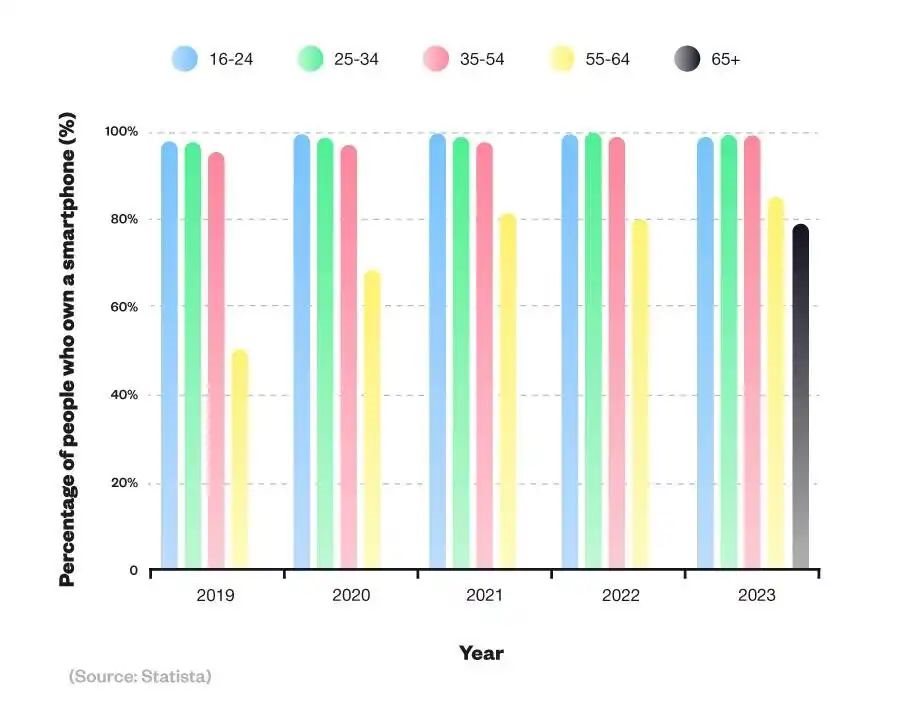
    I did a little digging and found the following stats on mobile phone use by age:

    This came from https://www.uswitch.com/mobiles/studies/mobile-statistics/ for those who are interested.

    With retirees now at almost 80% users then the number of those not using it is shrinking fast. At what point does it make sense to let that minority stop the majority from benefitting from the new system.

    I agree there should always be alternatives using old technology but as even land lines are being phased out in many cases this may not always be possible.

    There will always be losers when stuff changes and evolves but without progress we would still be relying on leeches and witch burnings to keep society "healthy".

    Second hand smart phones are cheap (new Android phones are pretty cheap too) and most people in that age group have enough technology exposure to at least grasp the principes and know how to learn more or who to ask. 

Reply
  • I'm curious at what point people consider it worth implementing a service that can benefit those who are able to use it in spite of a minority being unable or unwilling to do so.

    I have found the number of people who are now in retirement age and using smartphones to be steadily rising. I help out at the sheltered housing complex that my mother lives in when I'm in the country and offer my IT skills to the people there (fixing and training mostly) and have noticed the ones I used to help 10-20 years ago are mostly dead (I'm no JD Vance I promise you) and the next wave of retirees are much more likely to have tech skills.

    I did a little digging and found the following stats on mobile phone use by age:

    This came from https://www.uswitch.com/mobiles/studies/mobile-statistics/ for those who are interested.

    With retirees now at almost 80% users then the number of those not using it is shrinking fast. At what point does it make sense to let that minority stop the majority from benefitting from the new system.

    I agree there should always be alternatives using old technology but as even land lines are being phased out in many cases this may not always be possible.

    There will always be losers when stuff changes and evolves but without progress we would still be relying on leeches and witch burnings to keep society "healthy".

    Second hand smart phones are cheap (new Android phones are pretty cheap too) and most people in that age group have enough technology exposure to at least grasp the principes and know how to learn more or who to ask. 

Children
No Data