
Terminology

Are there any particular aspects of autism related terminology that bother you?

Here are some of mine:

1.

ND -v- autistic

NT -v- allistic

The above terms seem (from reading here) to have become interchangeable but, to my mind, they shouldn't be.

Autism is under the umbrella of neurodiversity but so is Tourettes (for example).

Here is a wheel of ND but I've seen some with more 'conditions' included:
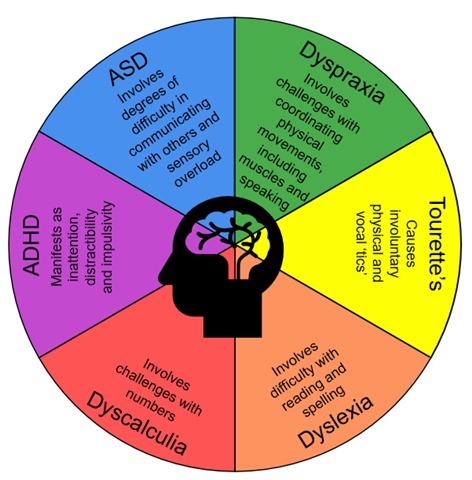
If ND is used instead of 'autistic' (when it's actually autism in particular that is probably the subject) I find it hard to follow the arguments/discussion.

2.

Another is the autism spectrum.

I don't know how it was meant when it was first termed, but my understanding of it isn't that there are ends of it that are less autistic, and more autistic, ie becoming more extreme, but rather than we (autistic people) can be less and more extreme as we dip in and out of the symptoms/characteristics:

Below is a link to an article that I think explains it well:

https://neuroclastic.com/its-a-spectrum-doesnt-mean-what-you-think/

3.

Also, if other people say 'we are all on the spectrum, all a little bit autistic etc' then I think it's important to bear in mind that a diagnosis is only given if the characteristics of autism that we match to are disabling to us.

How do others see the above and also, are there any other terms that you find difficult/confusing?

Parents
  • I use different terminology depending on the situation. I personally have autism and ADHD and I'm aware that many others also have coexisting conditions. It can be difficult to separate my traits and experiences into autism and ADHD so I will often refer to my nd experiences as this covers both. I also think many autistic traits can also affect people with other conditions that come under the nd umbrella so again I will use nd in these circumstances to be inclusive. If I'm talking about something that I think is definitely to do with autism then I will refer to it as autism.

    My understanding of the autism spectrum is similar to yours that there are no actual ends. I think they first believed it was like this but they now believe it is a circle split into different areas such as sensory issues, communication, social interaction etc. This seems slightly different to the article you posted but I think the general message is the same. People may sit in different places for different traits. For example, may only have some trouble communicating but are significantly affected by sensory stimuli. This is far more realistic to me than the idea that you're either "really autistic" or just "mildly autistic". There is however, a clear difference in the level of support that autistic people can need. Although sadly those seen as needing less support are regularly left to cope rather than given the support that they do need.

    I do not like the statements we're all on the spectrum or all a little bit autistic. It's factually incorrect and takes away from our struggles.

Reply
  • I use different terminology depending on the situation. I personally have autism and ADHD and I'm aware that many others also have coexisting conditions. It can be difficult to separate my traits and experiences into autism and ADHD so I will often refer to my nd experiences as this covers both. I also think many autistic traits can also affect people with other conditions that come under the nd umbrella so again I will use nd in these circumstances to be inclusive. If I'm talking about something that I think is definitely to do with autism then I will refer to it as autism.

    My understanding of the autism spectrum is similar to yours that there are no actual ends. I think they first believed it was like this but they now believe it is a circle split into different areas such as sensory issues, communication, social interaction etc. This seems slightly different to the article you posted but I think the general message is the same. People may sit in different places for different traits. For example, may only have some trouble communicating but are significantly affected by sensory stimuli. This is far more realistic to me than the idea that you're either "really autistic" or just "mildly autistic". There is however, a clear difference in the level of support that autistic people can need. Although sadly those seen as needing less support are regularly left to cope rather than given the support that they do need.

    I do not like the statements we're all on the spectrum or all a little bit autistic. It's factually incorrect and takes away from our struggles.

Children
No Data