Alternative to sunflower lanyard

Hi all. 

I've been wondering for a while now but haven't come across anything more subtle, than the sunflower lanyard. 

I'd rather have something more low key which alerts staff or security of additional needs or understanding, that the now universally used sunflower lanyard. 

Is anyone aware of another way which I can subtly inform of my autism? 

I really don't want the world to know, stand out in a crowd, excuses or sympathy from others.

It's quite awkward having to try and find a worker and explain to this stranger that I may need some support.

  • It's nice to see you again Roy.

  • Thanks, I chose it as it doesn’t have a missing piece. Nice to see you back.

  • FWIW I prefer the puzzle piece autism. It shows difference and fitting together - that appeals to me personally.

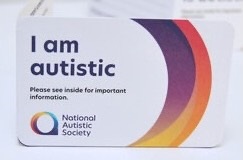
  • You could get an autism ID card that you could show to people you want to see it. That way no one else needs to know except who you show it to. I have an autism ID card that I got from the NAS shop and have found it more than helpful as I can show it to shop assistants and strangers when needed, like for example if I'm not very vocal or  there's an impending meltdown.

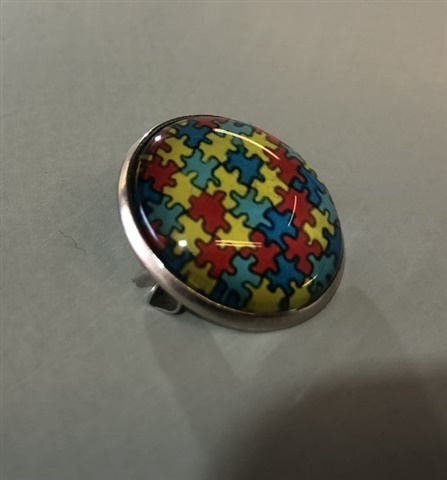
  • I occasionally use a glass button badge, I’ve found it useful at airports and train stations, most staff recognise the badges meaning without me looking too obvious, I know the puzzle piece isn’t liked by everyone, it’s just my personal choice. The badge just lives in my pocket and normally just goes on my coat lapel when I feel the need. I find it helps me when I’m less verbal.

  • Five years ago you could get a plastic "credit card" for 99p that informs people that you have ASD, (It was created for use in police interactions) and I got two (just incase I lost one).

    For the purpose of helping with potential interactions with the police, I suggest getting a vulnerability identification card (eg a Pegasus or Autism Alert Card) that is issued / used / recognised by your local police force.

    Some of these include you being registered by the scheme, and given a unique reference number that can be quoted, for example, at the beginning of a phone call. This enables them to quickly look you up without you needing to explain any further personal information whilst in the midst of what could be a very stressful situation.

    For example, the Pegasus scheme (used by several forces) includes:

    ”You’ll be issued with a card and a personal identification number (PIN) and if you need to call us, say 'Pegasus', tell us your PIN and we’ll access your details right away, which will save you time.

    You can also show your card to a police officer, member of police staff or other emergency services staff if you need assistance in person and they’ll know you may need extra help and support.

    Such cards are available free of charge. I have one, and feel very reassured by knowing that I can present it, if and when I ever need to.

    Links to recognised schemes for different police forces are available here:

    Alert Card Schemes - National Police Autism Association

  • Five years ago you could get a plastic "credit card" for 99p that informs people that you have ASD, (It was created for use in police interactions) and I got two (just incase I lost one).

    I've never actually needed to use it in a real life situation (after 60 years undiagnosed, I can pass quite easily as NT in most situations) but it is quite nice to have it in my wallet. 

    I personally find my own (particualrly, but since I've become aware and participated here a lot, also other people's) Autism quite personally annoying at times, so I have more sympathy for N.T. irritations or amusement at my little quirks, than I used to. 

    After all, I'm the "Uncompromising diversity" that has just been inflicted on them this particular day... It's improtant to try and give them the space and abilty to be nice about things, as well as offering firm opposition when they take it too far, and start excluiding you from things or treating you like you have nothing to contribute. Once they understand that I like to be asked to social events almost as much as I like to not actually participate in a lot of social things it gets easier to find a balance that suits everyone.

    And Ive eanred a life lesson form President Trump (woudl you belive) recently that seems to be working really well right now. 

    Just "walk away" from disrespectful people/situations.

    Don't argue, don't try to "win", just walk away. 

  • I have a national hidden disability card, but I keep it in my pocket.

    I don't do this out of shame, but because I would like to set some sort of priority for myself when others may need a higher priority.

  • Further to my previous suggestion (regarding using more discreet Sunflower Scheme products), you might also like to consider subscribing to MedicAlert and wearing their personalised jewellery.

    MedicAlert jewellery items feature a small amount of room for specifying important medical conditions - such as autism - along with your membership number and the phone number for MedicAlert (which is manned 24/7). This allows emergency responders to access your important medical information in case of need. The scheme is operated by the MedicAlert Foundation, a charity:

    MedicAlert

    Due to my co-occurring medical conditions, I routinely wear both a MedicAlert bracelet and Sunflower Scheme wristband whenever I go out.

    The NAS also offers a card that you could produce and show when needed. You can either buy a physical version or download a free version, both via this same link:

    NAS - I am autistic card

    I do understand your concerns; hopefully one or more these suggestions will meet your needs.

  • I'd rather have something more low key which alerts staff or security of additional needs or understanding, that the now universally used sunflower lanyard. 

    I suggest sticking with the Hidden Disabilities Sunflower scheme, but using one or more of their many other products, other than the lanyard. They also offer, for example, a wristband, chest ribbon, and pin badge:

    HD Sunflower shop - wristbands and badges

    Anyone who is familiar with the sunflower scheme lanyard should also recognise the significance of these.

    Obviously, they don’t convey the same amount of information as a lanyard-based card, but they do still indicate your potential need for support. 

    Also, their lanyard-based cards are available in a wide range of styles, including personalised versions. So you wouldn’t have to wear one that states “autism” on the front. You could choose one that states “hidden disability”.

    HD Sunflower shop - personalised cards

    HD Sunflower shop - standard cards

  • There are various versions of 'autism alert cards' available. They usually say things like 'I am autistic' in large lettering, then in smaller text list things that the card holder might have problems with. They can be kept in a wallet and shown to individuals when required.

  • It's quite awkward having to try and find a worker and explain to this stranger that I may need some support.

    I don't think there is anything else in recognised use so I would use the one tool that is available and universally recognised by staff - the sunflower lanyard.

    If you are expecting people to recognise it to help you but not to recognise it at the same time because you are embarrassed then you are creating a bit of a paradox.

    I would recommend using the sunflower lanyard but keep it out of sight other than at times when you are actively seeking help. These are the times you need to stand out and rely on the sympathy of staff to be helped.