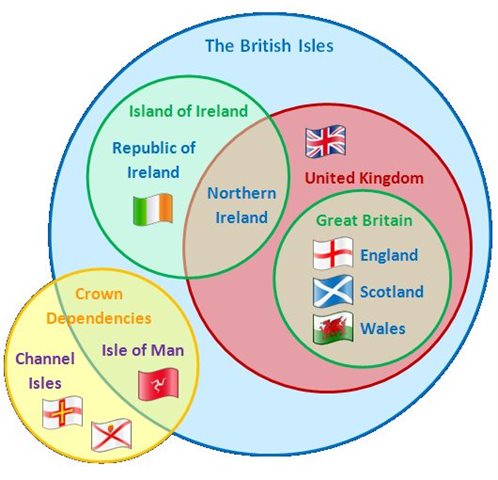
The Breaking Up of the UK.

Apparently, the heads of various regional assemblies have expressed a shared desire for future independence from Westminster at some point. Is this truly a serious proposal or even a desirable one? And what would real independence actually look like?

  • Is that urban/rural political divide similar in the UK?

    Yes. The counties in Scotland that tended to be blue (the colour of conservatism here) were the main farming counties, whereas the cities were traditionally red (the Labour Party). Labour lost power in the last election because it had become less socialist (which is not the same as communist). However, things are muddied in the three non-English countries of the UK because of the rise of nationalist parties in those countries, which tend to be social-democrat. The Scottish National Party holds the most seats, while the Welsh nationaist party, Plaid Cymru, is on the rise there due to the collapse of the Labour vote. 

    The situation is more complex in NI, which have their own parties that don't exist on mainland Britain. Both the main historical parties are nationalist, but the one that is staunchly pro-British is also conservative, while the main united-Ireland party is now progressive. Things are becoming muddied by a split between them and a rising non-nationalist party.

    Heh. Nothing's straightforward in the UK. Laughing

  • I know our farming situation is different to yours, but I'm sure we share similar mismatches and misunderstandings

    Agreed! That makes me wonder: Here in the US the rural areas are famously right-wing, while urban areas tend to be more left-wing. Is that urban/rural political divide similar in the UK?

    Every once in a while I hear people around here joke about a new Civil War, but logistically that would be insane since even in “red states” there are heavy centers of Democrats in urban areas, like Austin, Texas. If a Second Civil War were to occur, would Austin - a tiny blue dot in the reddest state of America - have to war against the rest of Texas? lol

  • I bring this up hoping that the situation on the border of Wales/England does not get as heated.

    heh. Those borderlands had theri own laws and rulers in the 15th century. They were known as 'The Marches' because an earlier king had established castles all the way up the border to keep the Welsh under control and soldiers marched between them. I lived in Marcher land for 20 years and you never knew (at least in the South Marches border) when you were in Wales of England, as some Welsh towns had English names and vice versa. I loved that liminal land.

    In the north Marches, one lord established a centrew for Welsh culture and rescued a collection of old Welsh poems, later called the Red Book of Hergest because that's where his manor was and he had the poems bound in a red cover. But for him, we would have lost most of what we have of Welsh mythology: the Mabinogi.

  • I could well see Devon and Cornwall and probably Somerset too creating a sort of "Celtic" or western arc, along with Wales and ireland and going up to Cumbria and Scotland.

    Most English aren't aware of their colonial history within the UK. Or, indeed, any of the history of the other countries. They don't know about the plantations of English people into Ireland from Elizabethan times, which essentially created Northern Ireland. Nor that Wales had its own laws and rulers until Tudor times, and Scotland didn't unify with England and Wales until the 18th century. And, if you go back to the 6th century, "The Old North" (Yr Hen Ogledd in Welsh), stretched from part of modern Yorkshire as far as central Scotland and spoke languages related to Old Welsh. But back then, western Scotland above The Old North was effectively Irish.

    Where you draw the line between countries is always a matter of what time in history you pick.

  • We don't have it that bad, I don't think Wales has tax raising powers,Scotland does, in Wales we can try and do things like double council tax on second homes and try and make tourists pay a premium, or make people doing B&B's pay business rates. But none of them seem that satisfactory and are often part of appeals to Westminster to stop our councils or devolved government from doing so. It feels like England want the power but none of the responsibility, its kept us impoverished, purposefully so, just as it has many of the English regions. 

    I think whereever you are you're going to have a lack of understanding between the needs of cities and rural life. So many people freak out at the idea of us not having the same services as they do in towns and cities, the distances you have to travel of basic things. I know our farming situation is different to yours, but I'm sure we share similar mismatches and misunderstandings

  • Many English people live in Wales and work in England, they swap length of comute for lower house prices, free prescriptions and all the other benefits that come from living here.

    We’ve actually got a very similar situation here in the Midwest with Illinois. It’s insanely expensive to live in Illinois (I think there’s only a couple states with worse property taxes?), so loads of people are moving to the neighboring states, with some still working within Illinois. It’s caused a bit of a crisis, since the Illinois state government is beginning to recognize the mass exodus and there’s talk that they are going to take some extreme measures to stop it.

    To make matters worse, Illinois is actually two states in one: Chicago (VERY Democrat) and Springfield (VERY Republican). Since Chicago is more powerful/populated, Illinois is considered a “blue state,” but that doesn’t represent a ton of farmers in Central/Southern Illinois. Chicago also has a long, sordid history of being led by proven criminals, so there is legitimately no reason for Illinois Republicans to trust Chicago leadership. Then there’s the necessary evil of Democrats keep jacking up taxes in general to afford the city of Chicago, which makes rural Republicans have to suffer.

    All this to say, if Illinois does go through with extreme measures such as heavy taxation on people attempting to move out of state, then it is only going to serve to further the already massive divide between Illinois residents.

    I bring this up hoping that the situation on the border of Wales/England does not get as heated.

  • Many English people live in Wales and work in England, they swap length of comute for lower house prices, free prescriptions and all the other benefits that come from living here. I imagine its the same in Scotland too, (I don't know about Ireland, so I'm not talking about it).

    I think the biggest shock wth greater devolution or independence would be on the English themselves, theres still a very colonial attitude from many English towards Wales certainly and I suspect Scotland too. We saw all that during covid with English people "trying to break into Wales" to get to their second homes, the lengths people went to were extaordinary, sending their luggage by courier so as they could trick the police guarding the border to enforce OUR lockdown rules.

    Then you've got th English regions, the North gets talked about a lot, its a large but distinct part of the England, and basically split by the Penines and the north east is very different to the north west, both geographically and politically. Then you have the south west of England which always gets ignored, branded as "south" buy those in the north and as "yokels" by those in in and around London and the home counties.

    If Britain federalised or became seperate independent nations then I could well see Devon and Cornwall and probably Somerset too creating a sort of "Celtic" or western arc, along with Wales and ireland and going up to Cumbria and Scotland. Historically and geographically Britain has more of an East West split than North South one, you can see this right through the archaelogical record and into historical times too.

  • Do they mean true independence, where the country is left entirely on its own to survive in a highly competitive world?

    That's what Scotland and Wales mean (although Wales isn't looking for that, yet). NI means unification with Ireland.

    Or do they really mean (which I suspect is actually the case) that they simply still want to be subsidised by Westminster, yet have the freedom to make autonomous decisions about, for example, whether to rejoin the EU or not participate in foreign wars, etc.?

    Scotland is self-financing, if it had access to its own resources rather than being forced to give them to the UK. 
    None of the three countries - Scotland, Wales or NI, would be able to join the UK while being a part of the UK, so any desire to do means means leaving the UK entirely. 

    The basic three options for the four countries of the UK are:
    (1) continue as we are, with England imposing its will on the other three countries
    (2) splitting into 4 separate nations, independent of other in the same way France and Germany are different nations
    (3) having a federal system, rather like the EU, where each nation has an equal voice in laws, military action etc

    Choosing (2) will indeed involve having separate everything - NHS, army, navy, police/fire etc, currency etc.These implications were hotly discussed in Scotland ten years ago, at the time of the last referendum.

    Would free movement between regions still be allowed, like it is now, with many people heading south in search of jobs?

    Who knows? That would have to be negotiated. Many English people move north, if we have the chance. The Scottish oil fields are full of English workers.

  • You also wonder what these people mean by “independence.” Do they mean true independence, where the country is left entirely on its own to survive in a highly competitive world? Or do they really mean (which I suspect is actually the case) that they simply still want to be subsidised by Westminster, yet have the freedom to make autonomous decisions about, for example, whether to rejoin the EU or not participate in foreign wars, etc.? And what about the NHS? Would they be expected to provide their own independent health service? I rather doubt it.

    Would free movement between regions still be allowed, like it is now, with many people heading south in search of jobs?

  • In a dangerous world, no matter how much independence there is, it's vital to retain some kind of unity. I don't think anyone wants to return to medievalism or tribal systems. This is such a multicultural country it would be better to ensure each section has a voice, rather than arbitary geographical boundaries or even cultural boundaries which have less and less meaning as history moves on. [Hope this makes sense. My brain is definitely slowing down!]

  • I’ve noticed that. Some Antrim accents are a bit more Scottish sounding than others, while some are more like Donegal accents. For such a tiny place, N.I. has an amazing variety of regional accents, maybe because people didn’t, and some still don’t, travel much beyond the boundaries of their home town or village. 

  • My friend from Belfast (well, from various parts of the world/Antrim, but mainly Belfast) is frequerntly asked if she comes from Donegal. She assumes the part of rural Antrim she lived in as a child sounds similar. 

  • Most people here don’t either when they talk about Donegal. 

    I should have been explicit. People here use the term ‘down south’ more when talking about the country Ireland, not NI, say if referring to the price of petrol in Ireland, or the number of motor accidents etc. Donegal is just Donegal, as if it’s part of N. Ireland, even though it isn’t. (It’s part of Ulster, so maybe that’s why many people here love it and people there speak with an NI accent).

  • Everybody here talks about ‘down south’ to mean Ireland, even though some of Ireland is further north than Northern Ireland.

    heh, I never think of Donegal when I say 'down south'. Laughing

  • Y’know, this could all be solved by y’all just having fifty states. So much easier.

    (Except Illinois, which should honestly be two separate states. That state’s a mess lol)

  • Some people call Northern Ireland, North of Ireland, to distinguish it from Ireland which has a President and a Prime Minister (Taoiseach), usually because they don’t recognise British rule or they don’t want it. Some people call it Northern Ireland whether or not they desire a united Ireland. Everybody here talks about ‘down south’ to mean Ireland, even though some of Ireland is further north than Northern Ireland.

  • Good gracious, ‘president’ disappeared from my post, and I didn’t intend thatThinking.

    Predictive text must have anticipated