


I get confused, when do you use an S instead of a C, why do we get both of them together in the same word?
The same with S and Z.
Ph and F
and as for I before E except after C, there are so many exceptions to make this rule almost meaningless.
I get confused, when do you use an S instead of a C, why do we get both of them together in the same word?
The same with S and Z.
Ph and F
and as for I before E except after C, there are so many exceptions to make this rule almost meaningless.

I often think a word looks wrong when it's right.

I remember it being the only thing on my reports, being not good with spelling. I think I improved, as I took everything to heart and would write out any corrections ten times so I could get used to what it looked like. I am visual so I also know when words don't look correct. Even now I sometimes still have to run things through a word processing app as this forum doesn't have a spell checker when I'm on a pc, and I know when a word I've spelt is wrong but not always what it should be!
My daughter keeps writing phonetically, and can spell things differently sentence to sentence, but she writes a lot so I don't like to discourage her, just note it down for her so she can at least see it too!
This is awful, it's like you were set up to fail!
I think that the basic problem was shoehorning Old English into an alphabet developed for the Latin language. In Latin all Cs are hard, but not so in Old English where CH sounds were also shown by C. Compounds of C were also used that had unique sounds CG, made a DGE sound, so Old English ecg sounded like the modern edge (and meant the same thing). Three sounds that do not occur in Latin, voiced and unvoiced TH and W had their own letters garnered from the runic alphabet. When the Normans took over these letters were replaced by the modern conventions of double Latin letters to indicate single sounds (W was originally a double U or V).

Thorn is still used in Icelandic.
I used to play 'ball avoidance football'. I ran about, so could not be criticised on that score, but studiously avoided being anywhere near the ball. As I was known to be utterly useless at all ball sports, no one ever deliberately passed to me, which suited me fine.
Yes, I was also taught using ITA. When the teacher announced that in the real world an entirely different alphabet and spelling system was used and we had to switch to it, I gained a very usefully jaundiced view of all systems of hierarchy and a distrust of things I was told that I could not verify.
I too went to a Junior School whose Infant department did not use ITA, I came 130th out of 134 in my year in spelling. What a surprise!
Most days I was taken out of class and taught the ITA system, only about 4 of us were taught this way in a cloak room. The rest of the class were taught normal English.
I found it similar to learning your first language and suddenly being told to learn a new one and to never use your native language again.
ITA was invented by the son of Sir Isaac Pitman, he had invented shorthand.

I think that maybe we fall into one of two categories - either we are good at recognising patterns and so learn the "shape" of a word we've seen, or we're dyslexic and so struggle with words where there are no rules for the spelling.
I'm in the first group, so I see "neice" and automatically know it looks wrong - I think for a moment, write it as " niece", then I can see that's correct. In a spelling test when I was 10 (when I usually got them all correct) we were told to write "miser" and I incorrectly wrote it as "mizer" because I'd never seen it written down before.
I before E except after C is a rubbish rule though, as there are quite a few exceptions, such as weird, seize, height, leisure, or weigh. I know some are from French or Old English, but that doesn't help someone with spelling.
In English, Q is paired with u, which gives a "Kw" sound - as in Queen - while k is used for the sound at the beginning of King. (I believe that only non English words use just a q without the u, such as qi or qatari) Of course, the letter c makes the same sound as k in some words, like carols or carrots and the same sound as s in others, such as face.
Unfortunately our language is partly a mish-mash of others, and there often aren't any rules you can follow to help you spell correctly.
I wonder why they didn't standardise grammar t the same time as spelling?
I don't think I would of coped with how others were taught, we didn't have remedial classes at my school and we never got out of PE, so I just refused to do it.
I know where most of the English language comes from, many of our sk words are from Norse, like skirt as are =b y place name endings. One of the things I find interesting are languages like Welsh, Irish and Scot's Gaelic that don't have as many letters as English although they use the same alphabet. In Scottish Gaelic the sk sound is produced with s-g,, in Welsh one F is a V sound and two F's an F sound. W is another interesting one it's literally a double U, one of the things that English speakers have real problems with, along with the LL, which is a soft chl sound rather than the cl that English people think it is. It's also pronounced in a different part of the mouth and is aspirated from the middle of the mouth rather like a cat hiss. In Scot Gaelic a th sound is made with the tongue against the bottom teeth unlike English where the tongue is against the top teeth. Before standardisation TH had its own symbol, a rune called thorn, which looks like a P but with a triangle instead of a semi circle.

Aaaarrrggh! Nightmare...
This was my alphabet for infant school, Hergé describes very well how I try to spell, the ITA spelling was abandoned when I got to Primary school, non of the teachers believed I had been taught in this way, I came from a different infant school from everyone else in the class.
Ladybird books did a whole range of ITA books.
I obviously didn’t know I was autistic and have dyslexia, I was put into remedial lessons with what the teachers called ‘the pond life.’
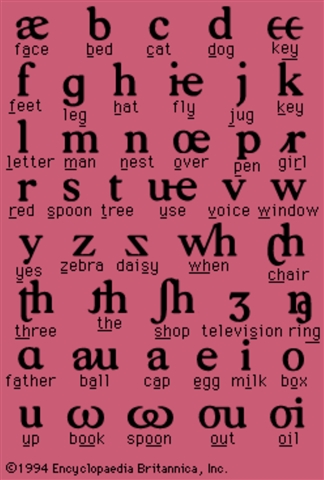
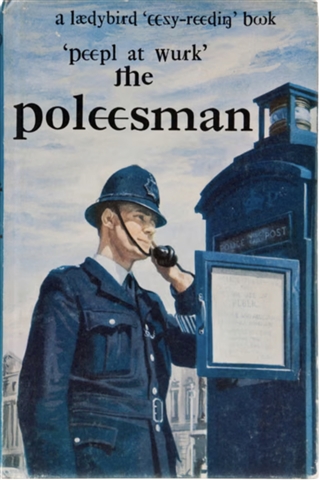
There's a thing called lexical dysgraphia which affects spelling, I have that and the regular version. So my writing is awful and I also struggle with spelling, I tend to spell phonetically which often runs into trouble with letters or pairings that sound the same.
Now I get the C/S thing. Tricky.
Words like 'precise' exercise' 'neice' 'nice, when to use an S or a C and as for nessercary I can never remember how to spell it, so I rarely use it when writing.
When to use two letter in the middle of a word is another muddle.
Then you've got Q's and K's, how do you decide which of those to use, let alone which witch?
I wasn't taught phonetics, I don't think, I know I wasn't taught grammar, the thinking at the time was that we'd pick it up just from reading.
I'm dyslexic too
I've always been quite good at spelling, but I am not sure how. I think it is just from reading a lot when small and familiarity, rather than from rules. As you noted, rules seem inconsistent and arbitrary.
Double letters are another confusion. When to have two n, m, s, etc. Plus you have words like borough or cough which make little spelling sense.
Knowing that English is a mixture of Anglo Saxon (Germanic), Norse (from the Vikings), French (from the Normans), Latin and Greek (from the church and scholars), plus some Celtic names and other adopted words from all over, does not make spelling easier, but explains the mixed rules.
Apparently, a thing called 'the great vowel shift' in the 14-16th centuries is a reason words aren't spelt how they sound, when spelling was standardized. Making some letters silent happened at the same time.


