


Many people find polytheism strange, I don't, I find it refreshing, what I don't understand is why so many people gave it up for montheism?
Many people find polytheism strange, I don't, I find it refreshing, what I don't understand is why so many people gave it up for montheism?
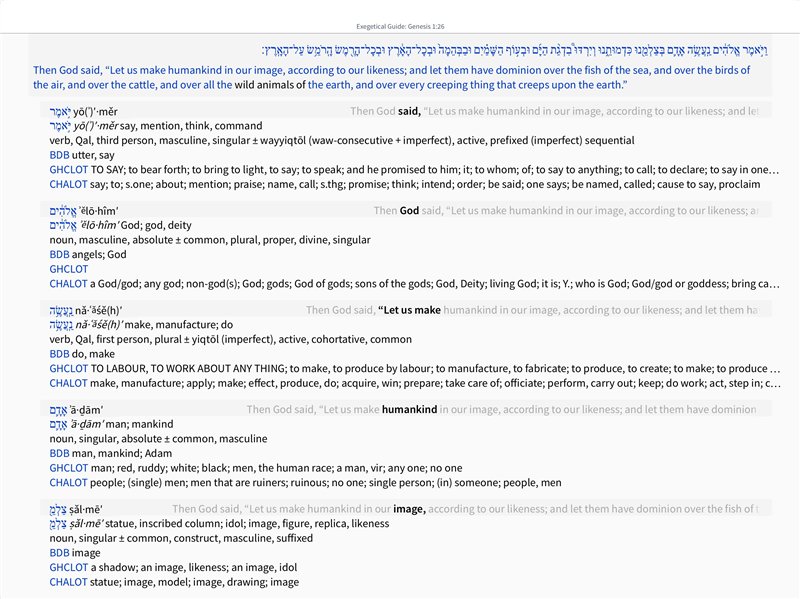
Software can translate Genesis 1:26 using different sources such as here.
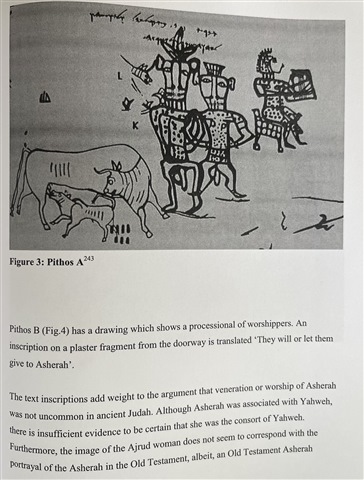
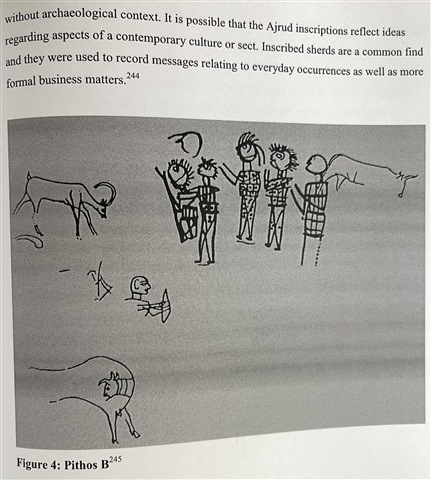
Asherah in non-biblical sources

I agree wholeheartedly with your lecturer. I have to rely on multiple different translations of the Bible and I use language software which gives multiple translation possibilities from individual known sources.
Academics who translate ancient Hebrew, Greek and Aramaic into English can be dealing with fragmented earlier texts originally written over centuries and they would draw on other non-biblical texts in an attempt to find a likely word, although they might argue that multiple uses of a word in one place, doesn’t mean it was intended to mean the same thing in a particular biblical text. Hebrew spelling was partly reflective of dialect and can give clues to geographical origin.
There are loads of different Bible translations. All translations have virtues and limitations and there is no such thing as a totally accurate translation as sometimes the original meaning has to be guessed. The early Hebrew, Aramaic and Greek texts of the Bible have phrases that are difficult to understand or are ambiguous. All translators have to make a choice between translating literally and preserving the obscurity of the original text, or to translate freely and resolve the ambiguity of the original. Generally, most differences in translation are small and do not take away from the overall theological (systematic study of revealed truth) meaning. The Bible has been put together by people who had a particular agenda (Judaism & Christianity), so it is imperative that one knows the genre of writing, why it was written and what it is addressing, among other things.
The Bible is made up of different Forms or genres. Eight major forms predominate: Law, historical narrative, gospel (a unique type of historical narrative), illustrative narrative (parables and allegories), wisdom, prophecy, hymnody, and epistle. There are two major style determiners, prose or poetry or both. a piece might be a record of a contract/list/letter, cultic ordinance and so on. A Form might indicate a life setting as in many of the Psalms of thanksgiving. The thanksgiving setting might have been adapted from an earlier thanksgiving event.
Asherah in the Bible
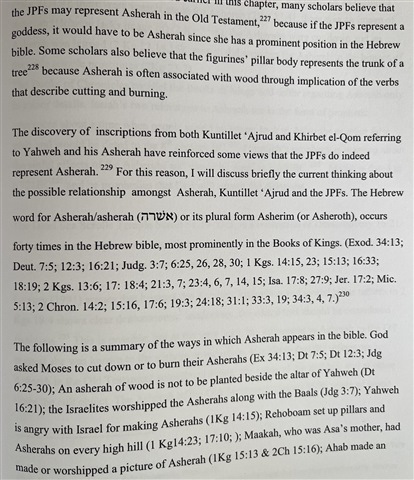
Continued…

I had a lecturer at uni who spoke several ancient languages including Aramaic, Hebrew and Greek, I got her off topic once, always an interesting thing to do, she thought that the bible had lost a lot of it's meaning in translation right at the begining. Translation is a tricky thing at the best of times, but with ancient translations even more so, there are often several words that could be chosen to translate one word or concept and the translator has to pick the most appropriate, this is turn leads to what is the most appropriate for the audience the text is being translated for, plus any bias they might have.
The passages you have quoted from the OT are part of why I find Christianity so confusing, as the NT is supposed to be a sort of new begining, but it relies heavily on the OT for it's creation stories etc, which are mostly a hi/story of the Jews.
It takes years for Biblical Scholars to be confident in understanding the OT, so I'm not surprised that you are confused, especially when your background isn't Christian. Most of the time, I rely on Bible Software and sometimes books to clarify the meaning of texts, and even then, there are often irreconcilable differences over the meaning of a word or phrase in translation.
Biblical Theologians from any of the main Christian denominations (e.g., Anglican, RC, Methodist, Presbyterian), if they have studied at one of the UK or Irish Universities such as Edinburgh, University College, Dublin, Oxford, Exeter, University of Wales & so on, would understand that the Bible can be read both literally in places, and theologically. Some Christians of other denominations would believe the Bible should be read only literally, word for word, so they are likely to be challenged by University theological teaching.
The Bible (from the Greek ta biblia meaning books) is a collection of books that were produced by different authors in mixed styles of writing, perspective and language over many centuries .
The Christian Bible in its present form is made up of forty six books of the Old Testament and twenty seven books of the New Testament.
Large portions of the Bible came gradually into existence through a process in which oral and written materials were passed down from one generation to another, acquiring their final form with the assistance and contributions of many individuals and groups along the way. There are no known original manuscripts. Each of the Biblical authors would have been facing a different set of circumstances and associated issues, as well as each having a different theological perception that would influence how they gave an account of God’s revelation. This diversity offers a challenge to the reader who needs to be aware of the distinct historical, cultural, and literary contexts of each biblical book.
The earliest sources of the Old Testament are likely to be a few pieces of poetry in Judges chapter 5, which may have originated from before 1000 BC. At the other end of the chronological scale, Daniel could be as late as 165 BC.
The New Testament dates from about 50AD to around 150AD. Its contents cover the period from just before the birth of Jesus around 3 or 2BC, until after his death.
Most modern translations of the Old Testament correspond roughly to the Hebrew Bible (Jewish Bible written in Hebrew) used by Jews today and follow an early 10th century Hebrew text known as the Masoretic Text (MT), that was associated with the tradition of the Masoretes of Tiberias in Galilee. This text, in some places, is unclear or ambiguous and amendments are needed. In these cases, Bibles such as the New Jerusalem Bible (NJB) draw on translations of a Greek text called the Septuagint (LXX) and some Syriac texts.
There are some Old Testament books that are not in the Hebrew Bible. These are Judith, Tobit, parts of Esther, 1 and 2 Maccabees, Wisdom, Sira (Ecclesiasticus), most of Baruch and parts of Daniel.
The origins of Judith, Tobit and Esther have not been determined. 1 Maccabees was originally written in Hebrew and was authored by a Palestinian Jew around 100BC, but only the Greek text came down to us. In contrast, 2 Maccabees was originally written in Greek, while 1:15-3:8 is from a Hebrew original. Daniel begins in Hebrew, but suddenly changes to Aramaic in 2:4 until the end of chapter 7.
I was told that "Ashera" was female and linked to olive groves, I don't know enough about it to say if it has any truth to it.
The Hebrew word for Asherah or its plural Asherim (or Asheroth) appears forty times in the Hebrew bible, most prominently in the Book of Kings.
I'll dig out the context for you later (I wrote pages about Asherah years ago) and also respond to the rest of your post, but you are definitely right that Asherah was female.The Bible says that an asherah of wood is not to be placed beside the altar of Baal, but it doesn't mention what type of wood. The Israelites worshipped Asherah and set up pillars.

I was told that "Ashera" was female and linked to olive groves, I don't know enough about it to say if it has any truth to it. I've know that Elohim was plural and possibly female for years, it's one of those things which pops up every now and again when discussing these things.
I've never heard of 'The pantheon of the Gods [becoming] the hierarchy of the Angels who did not side with Lucifer in the rebellion...'. Thats a new one on me, where did you read that, I'd be interested in reading that for myself?
I think seeing a pantheon as being just, 'representatives of nature..' a bit limiting, I guess it depends on which or who's pantheon you're talking about, many are much much more than that.
The passages you have quoted from the OT are part of why I find Christianity so confusing, as the NT is supposed to be a sort of new begining, but it relies heavily on the OT for it's creation stories etc, which are mostly a hi/story of the Jews.
I did not say anything out of turn. I was merely making a statement in response to your text that you posted:
I never stated that you said anything out of turn, being that it is fundamentally impossible to do so when writing posts, as everyone responds in turn, one after the other.
The problem was that you stated there was no evidence to state as I did conclusively, when I never stated it as being conclusive, it is just a matter of how things can be viewed from different perspectives ~ such as in the given instance involved the ancient west Semitic God El and his Goddess Asherah, for which there is plenty of evidence, one source for which is:
And another:
I did not say anything out of turn. I was merely making a statement in response to your text that you posted:
given that God said, "Let there be light" and so on and so forth with the expanse, water and land etcetera, and then further more ~ God said, "Let us make man in our image, in our likeness . . . ” in that the God of gods El was talking with his divine consort the Goddess Ashera; and
I will rephrase my reply. There is no known evidence that would backup what you say about Asherah in the context of Genesis 1:26. Any theories that have suggested Asherah is (or might be) the consort of God in this particular passage have been dismissed by academics.
God said, "Let us make man in our image, in our likeness . . . ” in that the God of gods El was talking with his divine consort the Goddess Ashera;Evidence is not available to say this conclusively.
I did not make that statement as a conclusion, and I have never written a conclusion in my life, even when they were requested or expected, given that all we can ever do is make a summation of what we know thus far.
Obviously people can argue which single perspective of a multi-faceted subject is the right one, but I just discuss them as they are, whereas the polytheistic elements remain as they are ~ whilst keeping in mind that monotheism and polytheism are ways of viewing things, neither of which exclude or suggest anything other than there being one true god as being the father of all.
Have a good one, and stay safely.
God said, "Let us make man in our image, in our likeness . . . ” in that the God of gods El was talking with his divine consort the Goddess Ashera;
Evidence is not available to say this conclusively.
Elohîm belongs to the linguistic root “El” which is one of the names of God. Gn1:26 can be translated as “Let us make man in our image”. Mainstream Christian Biblical Theologians have understood this to be an attempt by the writer to emphasise that God (El) is the one, true God, at a time when many other gods were being worshipped in the region.
Some scholars argue that (non-Biblical) texts show Asherah was the consort of El, others disagree, suggesting the texts refer to “El’s sanctuary”. The term “Asherah” is mentioned in parts of the Bible, but these do not relate directly to the Genesis text you quote. The form ‘’El’’ was in use in the Aramaic speaking world from at least the 8th century BCE. Text at Ugarit-Ras Shamra (in Modern day Syria) suggests Elohîm was used as plural form in the Ugaritic Pantheon.
A few have suggested that Gn1:26 refers to God and his Asherah, this has been proposed on the basis of likelihood, at a stretch, as texts elsewhere refer to Asherah, but this theory is not generally accepted. There is no conclusive evidence that the text is meaning anything other than what it says. My own view is that the “us” has made its way into the Biblical texts from earlier Aramaic sources and it shows that other gods were around and worshipped at the time of Yahweh (El).
take it you have not studied the book of Genesis so much, given that God said, "Let there be light" and so on and so forth with the expanse, water and land etcetera, and then further more ~ God said, "Let us make man in our image, in our likeness . . . ” in that the God of gods El was talking with his divine consort the Goddess Ashera; and the divine council collectively referred to as being the ‘Elohim’, which is normally transliterated out in English as being ‘The Lord God’.
This is blasphemy - there is no Ashera or consort that's demonic. I don't where you got that but it is not in Genesis and is not even vaguely Christian. There are no goddesses.
God is a blessed Trinity, one God, three persons - the Holy spirit, God the Father and God the Son. The Trinity is a mystery as God's ways are above our ways.
Elohim was a Jewish word for God - Hebrew and it means Supreme Mighty One.
That earliest known example is incorrect, man did not invent monotheism. It just is. Man invented polythesism because his brain could not cope with the idea that one God did all this. God created the Pharoh you mention, along with every single male and female that has ever existed.
Nothing you say is vaguely Christian and is all a lie from the pit of hell. But you are free to believe that if you wish. I will pray for you - because reality is so much better! God is infinitely glorious and there are hundreds of references to Him being one in the Bible, both new and old testament. I'm not going to argue with you because you though. If you ever want to know the truth ask the Almighty God to help you... He holds you in being and is your Father and He's always listening.
May God bless you
Monotheism came first.
The earliest known example of monotheism was introduced by the Pharaoh Akhenaten in ancient Egypt, around 1350 BCE, as far as we know archaeologically and historically at least. All known records of monotheism occur after the 1300’s BCE, seemingly around 600 BCE with Zoroastrianism, and 200 BCE with Judaism.
God (one) created the universe.
I take it you have not studied the book of Genesis so much, given that God said, "Let there be light" and so on and so forth with the expanse, water and land etcetera, and then further more ~ God said, "Let us make man in our image, in our likeness . . . ” in that the God of gods El was talking with his divine consort the Goddess Ashera; and the divine council collectively referred to as being the ‘Elohim’, which is normally transliterated out in English as being ‘The Lord God’.
Also, the Greek texts use at minimum masculine, feminine and androgyne grammar, so Genesis can be transliterated so that God and the Goddess created the heavens and the earth, and as such the Goddess said, "Let there be light" and [on account of God] there was light, and so on ~ which of course goes a long way for those who have had it up to the back teeth with secular and or religious misogyny.
Further more, in Psalm 82, it states, (1) God presides in the great assembly; he gives judgement among the “gods”. So monotheism did not come first in the bible either, with the book of Psalms having been compiled in the last thousand years preceding up to the Christ event, and the last text having been composed about 500 years before hand.
All the other so called gods are actually fallen angels and I must advise against any contact with them.
The pantheon of the Gods became as far as humans account for them as being the hierarchy of the Angels, all of whom did not side with Lucifer in the rebellion, and most polytheists treat their pantheon of gods as being representatives of nature and as such the spirit of life (i.e., God) and practice in ceremonies and make offering just as Christians and Catholic do with Easter, which was originally and still is a polytheistic tradition also.
Some aspects of your experience of the Christian faith are similar to mine Little Owl.
I used to be a Catholic Christian who felt ‘at home’ with some of the contradictions in the Bible because they could be explained by things like translation, authorship, intended audience, purpose of writing, dating of passage, or even dating of just a sentence inserted in a passage. Some writings were intended to be historical (yet may have only some known historically accurate elements ) other writings were intended to be understood as parables, allegories, teaching, sayings etc. A passage could be understood on different levels, yet sometimes nothing could explain it.
Regarding hell, it used to frighten the ‘bejesus’ (said in an Irish accent) out of me. Later I learned that there is no official church statement about the actual damnation of any individual human being. The fact that the Catholic Church hopes that all people will be saved and go to heaven was a revelation to me.
I gradually lost faith in Christianity because it has never satisfactorily explained the problem of evil and suffering, and other religions do not have a satisfactory answer either. Misogyny is alive and kicking within the Catholic Church, notably in the hierarchy, but it is also in other Christian denominations. The treatment of LGBTQ+ people has been disgusting, and it isn’t much better now.
These days I am agnostic. Apart from a few funerals, I haven’t been in a church building for years. Yet I continue to be inspired by the Gospel accounts of ‘Jesus the Radical’. He changed the lives of the marginalised, the poor, and those afflicted by all sorts of mental and physical illnesses. He was a brave man who didn’t hide within buildings filled with priceless treasures, surrounded by impregnable walls. I don’t believe he was God, but I do believe he was a selfless person who knew he was risking his life for the sake of others.
I wish you peace, and if you decide to explore your spirituality further, I hope you receive strength and consolation on the journey.

there is a specific way not to interpret the Bible and a specific way to interpret it. The wrong way, is to just read and make up what we think it means
This is the source of many of my issues with organised religion as this approach is saying "the church has interprited the bible in the way we think is right and anyone else is wrong".
The church then uses its organisation (ie preachers) to pass down this approach to the masses, effectively spreading this very specific interpritation.
When you see how often the interpritation has changed through time you start to realise how often the church was wrong or how they have simply updated the interpritation to avoid losing "market share" or to push the agenda of the day.
This starts to show that the church is much less about the word of god but about the business of the church - how to keep itself in power, keep the believers coming to them and to keep the coffers full.
My grandfather worked in the church and explained to me some of the machinery of the business of the church and it is really just a big corporation behind the scenes.
This is a big part of why I think faith is a great thing but organised religion is not.
You should try the Catholic faith, we have the magesterium which interprets the Bible the same as the apostes and the fahers of the church. We don't have female ministers and never will have, because Jesus did not choose females to be priests, despite their being very loyal holy woman in his followers. Being 'gay' is not a sin, but acting on those disordered feeling is. May 'gay' catholics live a holy celibate life. No person is bad or evil, it is merely that they do bad or evil things. All of which can be forgiven by God should they ask. Just to note the Bible is both literal and not, there are several ways to interpret it - all of them are worthy. God knew there would be autistic perople, He created us and He knows and respects our literal minds. He also knew there would be poetic people and all the kinds of people. It is wrotten for all of us. Don't get me wrong though, there is a specific way not to interpret the Bible and a specific way to interpret it. The wrong way, is to just read and make up what we think it means - hence much confusion , a lot fo people do this - the right way is to read it being guided by the fathers of the church and apostles - ie the closer to the source the better - how Jesus interpreted it, called Tradition, which is handed down sometimes written, sometimes spoken by the Church. Once you read it that way in that structured and ordered manner.... it's pretty powerful. Try this for starters on the Psalms - Commentary on the Psalms - St. Robert Bellarmine or this on the gosples The great commentary of Cornelius à Lapide : Lapide, Cornelius à, 1567-1637 : Free Download, Borrow, and Streaming : Internet Archive
I love the rules and structure of the Catholic faith (very different from other Christians) and like you hate the 'cherry picking'. I want the truth, the whole truth and nothing but the truth.
Hi Little Owl,
I'm glad you're enjoying this thread and sorry to hear you've become so afraid, I think this fear is common, ND people can not only take things very literally but very seriously too.
I've always found the Bible a very contradictory document, especilly when taken in context with the Old Testament, I thought Jesus was offering a new begining and previous slates wiped clean? There's also contradictions about what Jesus actually said and what he meant by what he said, like 'many mansions has my fathers house' and " the only way to the kingdom of heaven is through me", (sorry if I misquoted there, but thats the jist of it}. The many mansions of my fathers house has often been inturpreted to mean that there are many heavens, does this mean there's a heaven for catholics, protestants, jehovas witnesses etc along with some for other faiths? Why would there need to be many mansions, will the antipathy to other christian sects coninue in the afterlife?
I can't be doing with the lack of the divine feminine in many Christian sects or the emasculated figure of Mary, forever sorrowing the loss of her son. I can't see why gay people should be so reviled either, if god is love then why should who you choose to love matter? It all seems to be very hetronormative and rigid.
I've read quite a bit on the history of the church, I had to as part of my degree and choose to read further. What was practiced at the dawn of Christianity seems very different to how it was practiced after becoming the oficial religion of Rome, obviously things developed over the 350 years between the crusifiction and it becomeing an official religion, one fo the bigest changes seems to have been the melding of traditional Roman public holidays and it's beaurocracy and laws, what had been Roman civil law grew into cannon law.
The church in general has always been too violent and war like for me, by the 5th and 6th centuries it seems that ignorance way becoming highly valued and some Christians were behaving like the Taliban, the fate of Hypatia of Alexandria was a low point and absolutely horrible, a terrible thing to do to such a brilliant woman or to anyone for that matter. Her story is worth knowing about, but it has to come with a trigger warning. Then there's the horrors of the Crusades, the terrible treatment of Jews, the Witch Trials, the terrible things done to the Templars, and all the deathd because people believed differently or their physical features were thought to be signs of divine displeasure.
All this from a religion thats supposed to be about love, I think we could all hoped to be spared that sort of love!

This is a really interesting post TheCatWoman I never had a faith of any sort when I was young. I then became a Christian (I looked into the Christian faith simply because I was Christened as a baby because it was the normal thing to do in my family). I developed a more spiritual side to myself but as I explored my new faith more, I became more and more confused. I felt like some aspects of the bible were taken very seriously and literally, but others were overlooked or ignored. We were told that the bible was the word of God but then it was interpreted in ways that I didn't understand. Why was being Gay so awful but we were allowed female vicars (despite the bible saying women shouldn't be teachers). Not that I'm saying that we shouldn't have female vicars, of course we should, but I also think people should be able to love who they love without all the hate and judgement from church. I realised that church wasn't for me, I am too literal. I didn't like the 'cherry picking' and 'interpreting' to suit someone's own opinions. And to take the bible literally wasn't something I was comfortable with either, there's so much discrimination and sexism that I couldn't accept. I still believe there is a God and I still believe in aspects of the Christian faith but I don't want to accept organised 'religion' as part of my life anymore, I am happy with my personal faith and spirituality. I would like to explore my spirituality more but to be honest, the teachings I have had about heaven and hell, judgement etc have scared me and I feel fear around considering other faiths or beliefs now. I wonder if it is teachings like this that many of us had as children (through school, scouts / guides etc) that stops people from exploring beyond the faith they were 'born into' or bought up with?
Not meant as a guilt trip sorry
Well I did but I have to admit I can’t quite remember the name. It was years ago when I had asked but I was going to get another pendulum so I can always ask again. I do have a feeling it could have actually been a cartoon or anime character but who knows maybe they are all real too!