NAS, Autism and News Online


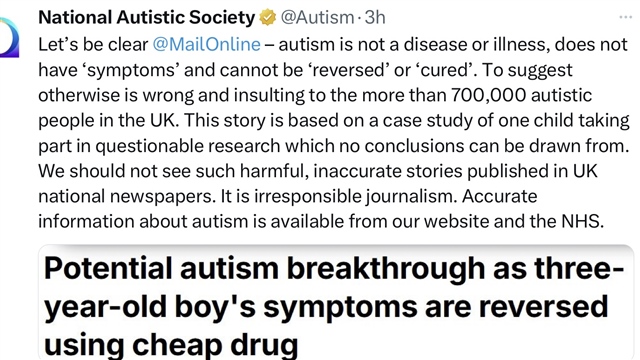
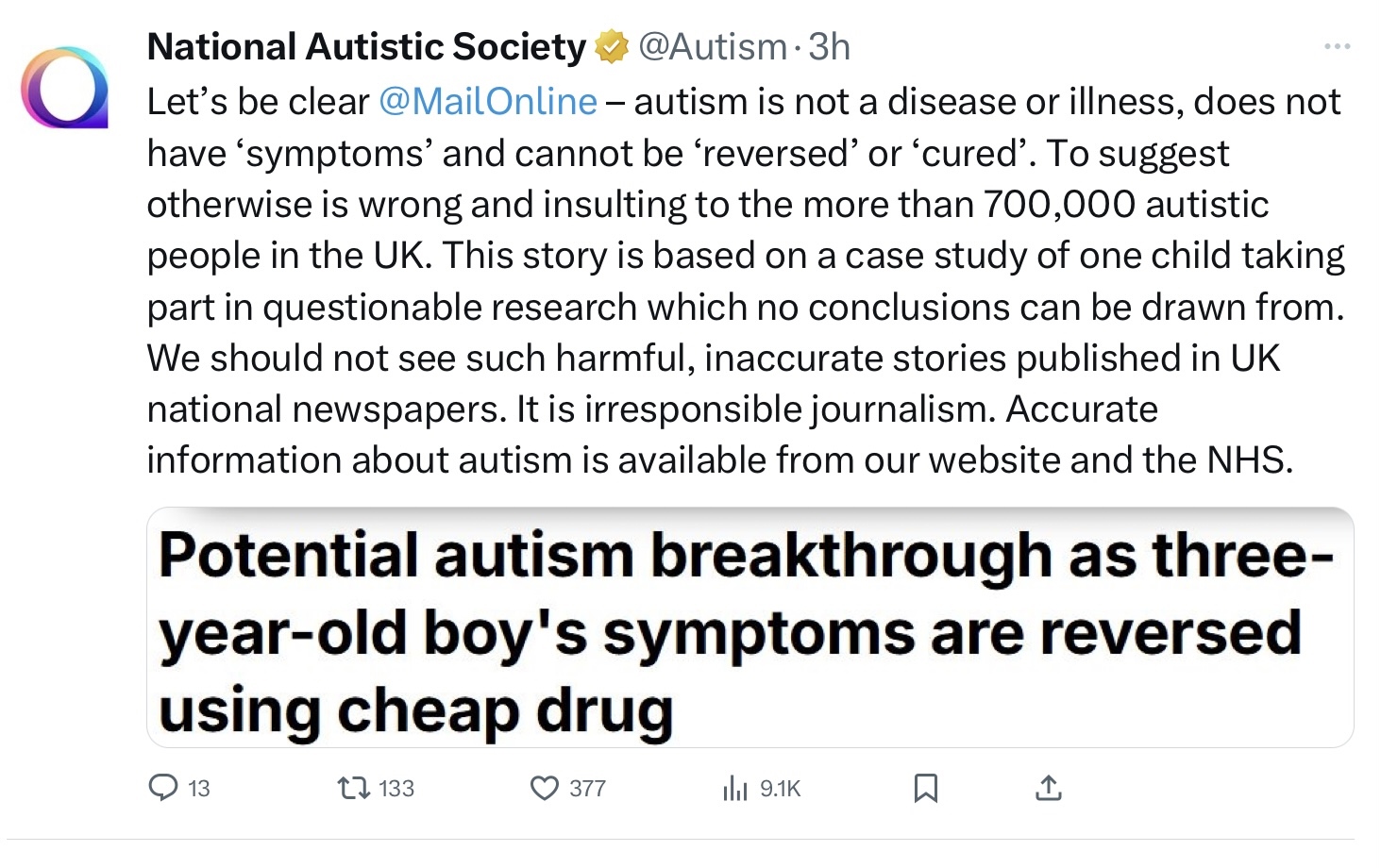
The NAS firmly rebutted the MailOnline’s portrayal of autism as a disease in a Tweet today. A search online can easily bring up headlines claiming autism reversal has happened or has the potential to happen in the near future.

Do newspapers and online sites provide a reliable source of news, given that partial truths, misinformation or lies perpetuate all sides of the political debate?

I find myself scanning increasing numbers of newspapers and online sites to satisfy my need of a reasonable assessment of a situation or claim reported. It is frustrating and time consuming, but I can’t easily stop, and I’m not sure I want to be unaware of what’s going on in the world.
 

Parents
  • I too went down a rabbit hole of spending hours reading multiple News sites trying to piece together what was "fact" versus "bias" or just "lies". It was very bad for me and contributed to a serious mental health episode.

    I still want to stay reasonably well informed, so didn't ditch The News altogether. My solution was:

    1) read a roundup of the UK newspaper front pages each morning - and zoom in to read the front pages too if the image quality is good enough. These are available on various sites and give a high-level roundup of what the UK press considers the "issues of the day" are.

    2) focus on a very limited number of stories you're actually interested in, rather than trying to cover everything. If nothing really interests you then don't bother reading more. The News isn't adult homework, there won't be a test, so it doesn't matter if you only know the headlines.

    3) have a smallish selection of sites to read up on the stories of interest - e.g. BBC, Sky News, Reuters, Financial Times, Guardian, Times etc take you pick, and don't go looking for more and more sources to read the same story. I have a Financial Times subscription mainly for work purposes, but it's good for other News too so that's one of mine.

    4) set aside a fixed time to read The News and don't follow 24 hr feeds throughout the day.

    5) remember that the truth isn't out there, only multiple sources all with their own biases. You'll never read all of it, and you won't find one "golden source". Try to be satisfied with having "a fairly good picture" not forever chasing a perfect one.

    ...also, my personal advice is to 100% avoid the MailOnline which seems to have a "publish first, fact check later" approach (if they ever do fact check).

    Good luck!

Reply
  • I too went down a rabbit hole of spending hours reading multiple News sites trying to piece together what was "fact" versus "bias" or just "lies". It was very bad for me and contributed to a serious mental health episode.

    I still want to stay reasonably well informed, so didn't ditch The News altogether. My solution was:

    1) read a roundup of the UK newspaper front pages each morning - and zoom in to read the front pages too if the image quality is good enough. These are available on various sites and give a high-level roundup of what the UK press considers the "issues of the day" are.

    2) focus on a very limited number of stories you're actually interested in, rather than trying to cover everything. If nothing really interests you then don't bother reading more. The News isn't adult homework, there won't be a test, so it doesn't matter if you only know the headlines.

    3) have a smallish selection of sites to read up on the stories of interest - e.g. BBC, Sky News, Reuters, Financial Times, Guardian, Times etc take you pick, and don't go looking for more and more sources to read the same story. I have a Financial Times subscription mainly for work purposes, but it's good for other News too so that's one of mine.

    4) set aside a fixed time to read The News and don't follow 24 hr feeds throughout the day.

    5) remember that the truth isn't out there, only multiple sources all with their own biases. You'll never read all of it, and you won't find one "golden source". Try to be satisfied with having "a fairly good picture" not forever chasing a perfect one.

    ...also, my personal advice is to 100% avoid the MailOnline which seems to have a "publish first, fact check later" approach (if they ever do fact check).

    Good luck!

Children
  • It’s interesting that you were in a similar situation to me. I read the newspapers online through the library. I agree that the MailOnline is sensationalist, but the paper isn’t any better. The foreign papers often have a very different perspective to the British papers. I think I will always struggle with limiting myself in anything to do with facts/half truths/fiction, but clearly I need to limit my intake because my mental health is suffering.