NAS, Autism and News Online


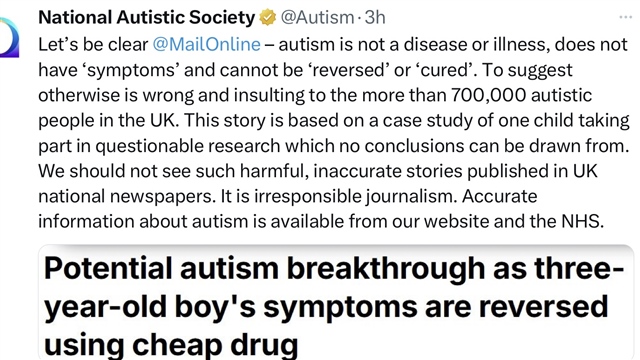
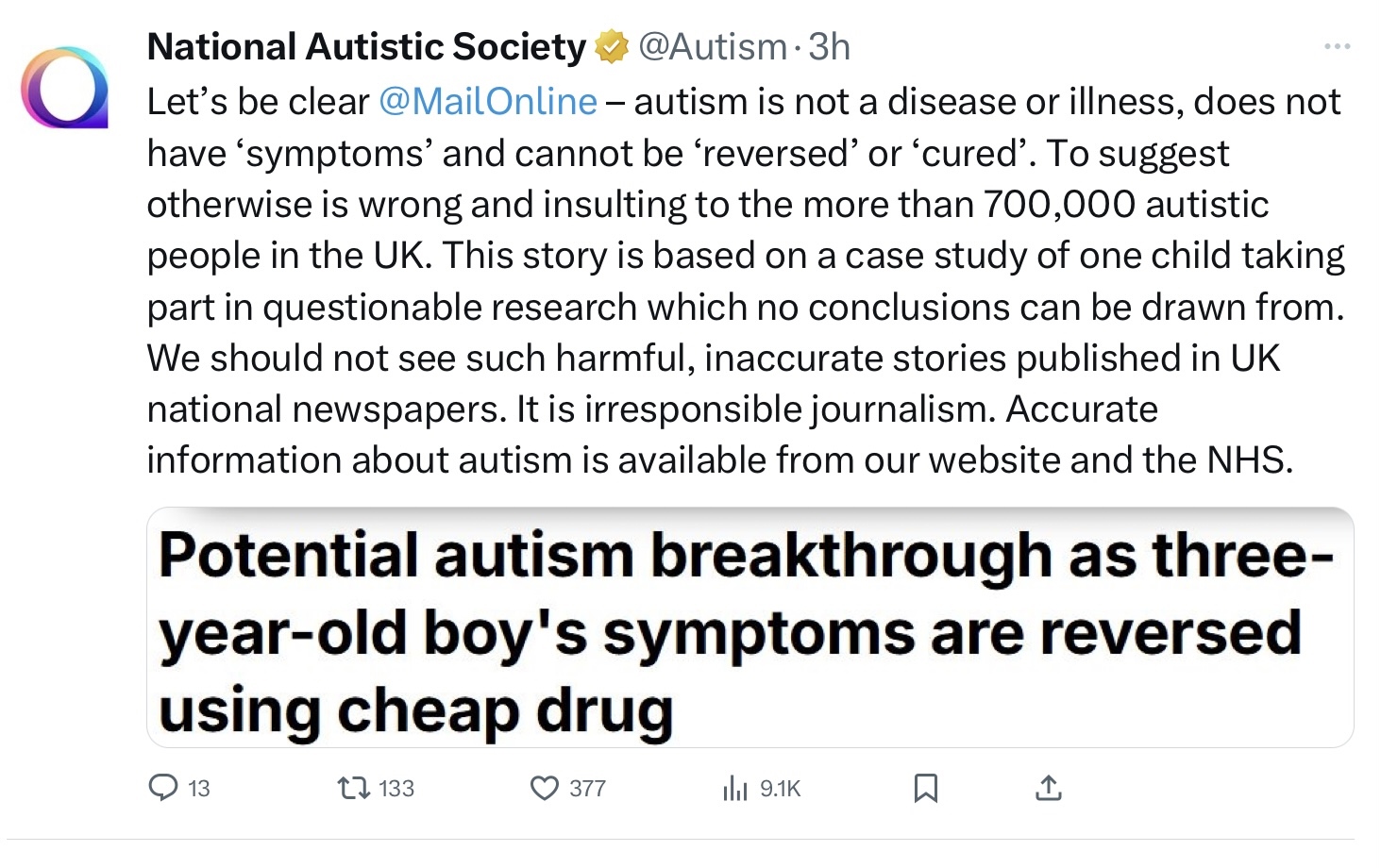
The NAS firmly rebutted the MailOnline’s portrayal of autism as a disease in a Tweet today. A search online can easily bring up headlines claiming autism reversal has happened or has the potential to happen in the near future.

Do newspapers and online sites provide a reliable source of news, given that partial truths, misinformation or lies perpetuate all sides of the political debate?

I find myself scanning increasing numbers of newspapers and online sites to satisfy my need of a reasonable assessment of a situation or claim reported. It is frustrating and time consuming, but I can’t easily stop, and I’m not sure I want to be unaware of what’s going on in the world.
 

Parents
  • I’m not sure I want to be unaware of what’s going on in the world.

    Consider the price in your time, effort and anxiety to achieve this - do you think it is good value. Does it make you feel good, does it enrich you and does it make any sort of meaningful difference in the end.

    I would use these high level assessments before making a concerted effort to wean yourself off the sensationalist news feeds - I personally find them mostly unhealthy and largely useless so limit my time on any news feed because they purposefully try to generate anxiety to pull you into reading more and consuming their content.

    I don't believe any of the news source is truly impartial and accurate any more - you have to patch together the information, find any unbiassed sources (if they exist) and draw your own conclusions, realising they will be affected by your own bias and try to see the closest approximation of the truth you can.

    In the article above NAS provide scientific fact to support their arguement while the newspaper passes on drug companies claim about how great their dugs are. Draw your own conclusions on where the truth probably lies there.

    My advice - wean yourself off the news.

Reply
  • I’m not sure I want to be unaware of what’s going on in the world.

    Consider the price in your time, effort and anxiety to achieve this - do you think it is good value. Does it make you feel good, does it enrich you and does it make any sort of meaningful difference in the end.

    I would use these high level assessments before making a concerted effort to wean yourself off the sensationalist news feeds - I personally find them mostly unhealthy and largely useless so limit my time on any news feed because they purposefully try to generate anxiety to pull you into reading more and consuming their content.

    I don't believe any of the news source is truly impartial and accurate any more - you have to patch together the information, find any unbiassed sources (if they exist) and draw your own conclusions, realising they will be affected by your own bias and try to see the closest approximation of the truth you can.

    In the article above NAS provide scientific fact to support their arguement while the newspaper passes on drug companies claim about how great their dugs are. Draw your own conclusions on where the truth probably lies there.

    My advice - wean yourself off the news.

Children
  • I agree that it is important to strike a healthy balance with newspapers and online sites. I struggle with that, and it’s compounded with fact finding information on all sorts of things that aren’t necessarily one of my long term specific interests. These can be anything from something somebody said, a character in a novel referring to a real historic event or reading about mountain gorilla communication. I can get fixated on a particular topic, but that lasts only until I find everything possible about the topic, and then something else comes along … The news is the one interest (not counting my special interests) that is long term but I need to reduce reading time.