The Pros And Cons Of Monotropism

This video about the strengths, challenges and strategies of monotropism attracted many interesting comments.

I appreciated one person's comments acting as a summary of their notes from watching the video:

"Strengths:
1. Ability to provide 100% of attention, therefore become an expert in your field.
2. superhuman ability to ignore all else/ don't see distractions.

Challenges:
1. Missing a lot of info
2. Lack of tasks where monotropism is best strategy.
3. Energy required to switch tasks
4. Maintaining weak tie relationship is difficult.

Strategies:
1. Lifestyle design- design life around strengths. Pick high reward tasks.
2. Start noticing how much transition time you need.
3. Leverage flow state.
4. Give yourself time to wind down "

Within strategies, number 2; about how much transition time you need between tasks is something I have been practicing recently - and have found to be helpful.

https://www.youtube.com/watch?v=5p8BD73xXxI

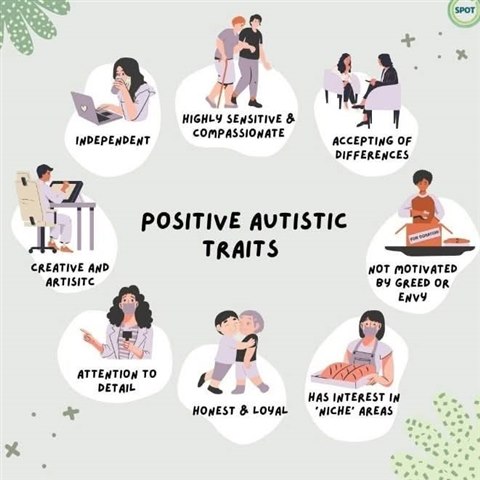
I don't think we talk about and explore our strengths / positives as often as would be educational and supportive.

If we can learn to assess our personal Autistic strengths - maybe that can help us to better profile ourselves - closer to employment and volunteering opportunity matches - while mitigating the likelihood of burnout.
Parents
  • Monotropism combined with executive dysfunction is a PITA. There is always something I can hyperfocus on at any particular time—it's relatively easy for me to enter that state. However, I can almost never hyperfocus on what I need to focus on—it's a never-ending source of frustration.

    Tax return to do. OK. Go! ... I'll just get warmed up with my morning sudoku ... [eight hours later] ... Well, that's enough sudoku for the day. Oh, is that the time. I have to make dinner. I'll do the tax return tomorrow.

    That sort of cycle can go on for months, literally.

    OTOH, my daughter needed help studying Maths for a few weeks. I was 110% into it and could go and go for as long as she needed/wanted me to. I've even been known to hyperfocus on my paying work, which is nice, but it's very rare.

  • That sort of cycle can go on for months, literally.

    Procrastination is a real hassle, isn't it?

    I find setting a date to do something like the tax returns and having 4 alarms set through the morning is normally enough to badger me into action. I also set 2 further dates for follow ups as I will often find I need some document or another from a 3rd party so can't do everything in 1 sitting.

    Most of the time I get into the habit of just starting the thing even if I'm not prepared and not allowing anything to happen beforehand just so I get it done. JFDI for the win!

Reply
  • That sort of cycle can go on for months, literally.

    Procrastination is a real hassle, isn't it?

    I find setting a date to do something like the tax returns and having 4 alarms set through the morning is normally enough to badger me into action. I also set 2 further dates for follow ups as I will often find I need some document or another from a 3rd party so can't do everything in 1 sitting.

    Most of the time I get into the habit of just starting the thing even if I'm not prepared and not allowing anything to happen beforehand just so I get it done. JFDI for the win!

Children
  • Procrastination is for amateurs; I'm into perendination!

    What helps me (if I can make myself do it), is to write down all the little individual steps in the task and then commit to doing just one of them. A checklist, of sorts ("Print bank statements", "Sort receipts chronologically", "Record phone expenses", etc.). Once done with a step, I check it off. I'll often get on a roll and blast through a few of them. Eventually, I'll get to the end. It sort of gamifies the procedure and helps me to engage.

    One problem this year is that my usual checklist has gone missing, so I have to write a new one. I've been meaning to do this since February and I have until early November, so I'm not panicking yet. Panic is my great motivator, though. I can get a lot done when my back is to the wall.

    I'm also experimenting with the concept of a "body double". For example, if I'm at the PC, my wife will sit in the room drinking a cup of tea and doom scrolling Facebook. Just the presence of someone in the room seems to help me sit still, which is nearly half the battle.