Cornwall - Police Pilot Project - Wearable ND Tech Wristband

I have re-read both of these articles a couple of times - and I am still not quite sure what I think about the wording choice and product /pilot project target wearer age group:

"Police launch pilot to support neurodiverse people"

https://www.bbc.co.uk/news/articles/c1ljmd5my63o

I feel the choice / use of language in this BBC article could be off-putting to some people.

The photos show a product described as:

"...involve the use of green wristbands knows as "neurodiversity IDs" (NDIDs)."

If the descriptive language choice and name of the product were to put people off using them - that would be unfortunate - as I believe the wearable tech product / pilot project demonstrates good intentions to improve communication of key healthcare and wellbeing information.

Here is the Devon and Cornwall Police news article on the same topic (again, the language choice seems a bit unfortunate):

"Police launch pilot to improve communication between emergency services and people with neurodiversity"

https://news.devon-cornwall.police.uk/news-article/cf197c10-1553-f011-9d7d-6045bdd24049

The Police article (27 June 2025) says:

"Pilot leads within the Cornwall area are working with local policing teams and partners to identify those able to take part in the pilot."

It would be interesting to know how Autistic people (in Cornwall where the pilot project takes place) experience using the product.

Here is the Seritag description for what appears to be a similar version of the pilot product:

https://seritag.com/nfc-tags/adjustable-nfc-wristband

It is a NFC chip and aerial in a silicone wristband (it doesn't use a battery in the wristband).

"NFC, or Near Field Communication, is a short-range wireless technology that enables communication between two devices when they are brought close together, typically within a few centimeters. It's commonly used for contactless payments, data exchange, and connecting electronic devices. Essentially, it allows for secure and simple data exchange or transactions with a simple tap or touch."

https://seritag.com/learn/using-nfc/nfc-tags-explained

All smartphones can read a NFC chip.

FAQ:

What is the scan distance of an NFC Tag ?


"The answer depends on both your particular phone and the tag itself, but generally you need to be within two to five centimeters (two inches)."

Parents
  • I believe the wearable tech product / pilot project demonstrates good intentions

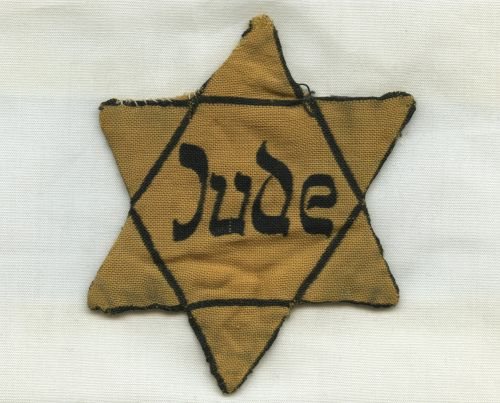
    I'm very wary of this as it has some anchors in history where a group of people needed to be easily identifiable for reasons that only became apparent later.

    Look at what RFK Jr is doing in the US with wanting a national register of autists while saying he wants to eliminate it (through banning vaccines initially but when this doesn't work, what next?) - it all makes it too easy for the sort of facist regiemes to consider now they are gaining more traction in power around the world.

    I get that the intentions at the moment are good, but it makes it much too easy for bad actors to consider taking us all into "care homes" in the future to make sure we get the care we deserve. with us being collectively such a drag on benefits then it would be easy to justify the first steps.

    Should a far right party get into power here and start learning from Trump, this becomes much too uncomfortable a possibility.

  • It is true that neurodiversity is being portrayed in increasingly negative ways in the media, particularly social media, and in everyday casual conversations and I agree with much of what you say. 

    Negative remarks about autism have gone from “we’re all a little bit autistic” and “you don’t look autistic”, to something more alarming such as “autistic people are worthless” and “autistic people are dangerous”. When referring to people who have been charged to court for assault or murder, I have heard comments such as “I suppose he will claim to be autistic”. 

    I don’t see a problem with changing the wording on the Seritag to something that shows it’s an emergency contact device. Then it could be used by every person who is vulnerable whether or not neurodivergent. Children, adults with learning difficulties, stroke patients, cancer patients and older people could all potentially benefit from the device. 

    In the meantime, I am relying on my Apple Watch and iPhone  to alert the emergency services if I have an accident or I’m incapacitated. My contact details and medical history are available and according to Apple, can be accessed by the emergency services, without access to other phone data.

Reply
  • It is true that neurodiversity is being portrayed in increasingly negative ways in the media, particularly social media, and in everyday casual conversations and I agree with much of what you say. 

    Negative remarks about autism have gone from “we’re all a little bit autistic” and “you don’t look autistic”, to something more alarming such as “autistic people are worthless” and “autistic people are dangerous”. When referring to people who have been charged to court for assault or murder, I have heard comments such as “I suppose he will claim to be autistic”. 

    I don’t see a problem with changing the wording on the Seritag to something that shows it’s an emergency contact device. Then it could be used by every person who is vulnerable whether or not neurodivergent. Children, adults with learning difficulties, stroke patients, cancer patients and older people could all potentially benefit from the device. 

    In the meantime, I am relying on my Apple Watch and iPhone  to alert the emergency services if I have an accident or I’m incapacitated. My contact details and medical history are available and according to Apple, can be accessed by the emergency services, without access to other phone data.

Children
No Data