Alternative schooling

This thread was inspired by   and this quote:

'School can ruin or taint so many aspects of life'  in this thread:

 HI EVERYONE I am new here 

This set me thinking about what type of education would actually suit autistic people best.

One thing I'd like to avoid is forced education - making people study subjects they dislike or are not good at and especially the exams - from what I see, there is much more pressure on achievement for children nowadays than when I was at school which must be very stressful.

Also, I wonder what would help to alleviate the bullying that certainly was endemic when I was at school - smaller classes maybe.

From my own experience the bullying and trauma of school can have a lifelong detrimental effect. 

Montessori schooling impresses me:

https://en.wikipedia.org/wiki/Montessori_education

What do you think?

Any radical changes you would like to see in education - whether private or state?

I am talking about the UK because that's all I have experience of but please talk about your own country too.

  • That is a very good point, how would you address that? Perhaps you to fact check what you find and and teach humility as a skill? 

  • I think children in school should be getting outdoors more, not just P.E. but learning about plants, wildlife and trees.

    No PE for me thanks!

    But yes, I'd have absolutely loved to have got out and learnt about our natural world - a great interest of mine since childhood.

    The most impactful days I remember in high school was when they had outside agencies come in to teach us things, a police officer came to teach us about road safety, someone came to teach us about gang culture and how to stay safe, I still remember the lady who came in to teach us about periods and puberty. Things away from the curriculum that are important and actual life skills. 

    Yes, life skills are mentioned a few times in this thread.

  • I'm a late diagnosed autistic woman in my thirties. I didn't know I was autistic when I was in school, I don't think I had even heard of the term autism. Primary school was fine for the most part. High school was a living nightmare most of the time. The noise, the crowdedness, the constant feeling of other girls observing and commenting on every little thing I ever did, it was like being under a microscope. Also, having to sit through lessons of subjects that I just didn't care about or didn't understand.

    I loved English, absolutely adored it and had a good teacher every year of high school. I probably would have enjoyed history and geography but I went to a rough underperforming school and they seemed to have great difficulty holding onto teachers so it was rare to actually have a permanent teacher never mind a good one. 

    I think classrooms are far too big and we're cooping children up inside a classroom for six hours a day which just isn't a good strategy for anything. It's funny but about 7 years ago I got a job working in a call centre and the first four weeks was classroom based training and honestly, this group of people in our 20s, 30s and 40s just descended into naughty children and were getting told off by the poor trainer for talking, messing around, not working. I think, because sitting still in a classroom is not good for anyone, never mind just children. 

    We need to know how to read and write, we need to know how to basic maths (although I actually think we should be teaching children about money) and we need life skills. I think history is important but hands on history with trips and museums, my primary school was fantstic for that (the romans in Chester, museum for Egyptology). I think children in school should be getting outdoors more, not just P.E. but learning about plants, wildlife and trees. I did see an article recently about a school in the UK which have a therapy puppy which I think is an amazing idea. 

    The most impactful days I remember in high school was when they had outside agencies come in to teach us things, a police officer came to teach us about road safety, someone came to teach us about gang culture and how to stay safe, I still remember the lady who came in to teach us about periods and puberty. Things away from the curriculum that are important and actual life skills. 

    I like to hope things are a bit different now to when I was in school.  

  • this is such a good point about school size and the variation between playgrounds and things. I went to a larger school than the one you are describing here but didn't have the problems with playground since we had large fields and things to spread out and give each other space! it's surprising the differences between different schools and areas and what this means. I don't know if this level of detail is represented in things like school ratings or not but they are definitely important considerations for autistic kids. but also, most people it's just which school is the closest will be the only option. 

  • hi B, yeah this is a very interesting topic! what you are saying about forced education makes me think about if anyone has had the chance to study their autistic interests or had them incorporated into education. I know when I was in university I loved being able to choose the modules and get specific compared to back in school. 

    & this is definitely a problem with class sizes. all of this shows how meritocracy is most definitely a myth! I mean imagine a neurotypical in a smaller private school, with their own tutors etc compared with an autistic in a crowded and sensory nightmare of a classroom without the right/ maybe no support. 

    trauma of school is hard, I feel for you, I can relate. it's crazy the difference between enjoying to learn vs all the environment and things associated with most schools for autistics. especially when so many of us love learning deeply!!

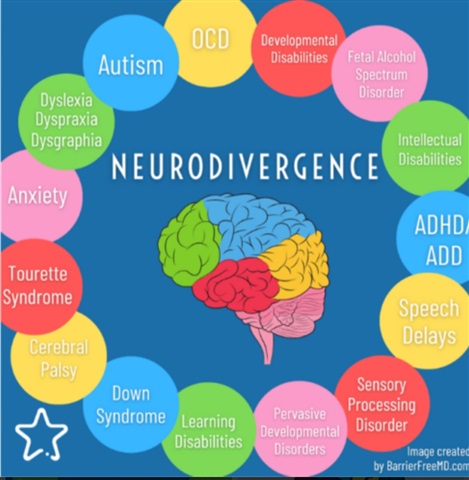
  • When you look at the above and bear in mind that autists often have more than one neurodivergent condition, is it any wonder that we often struggle with schooling as these things tend (or tended) to go unnoticed and therefore undiagnosed and might be seen as something else eg. learning difficulties or 'not trying hard enough'.

    I believe that I have OCD, dyspraxia, anxiety, auditory processing disorder and dyscalculia.  Enough to make school a struggle.

  • If you rely on memory alone like they teach you in exams, then you are more likely to have out-of-date-knowledge and not listen to experts.

    I am finding the internet a bit of a problem in that regard today because as you can look things up, it seems to me to lead to complacency and a rather 'know it all' attitude in some people.

  • PE

    I would have liked that to be optional even when young - I deeply hated gym + sports etc partly because I was undiagnosed as acutely short sighted so I was as likely to run into sports equipment as jump over it.

  • Thanks all - I am finding your replies very interesting along with your different experiences.

    There should be far more emphasis on applying knowledge, rather than memorising it. 

    Indeed.

    My husband went to a Technical High School.

    These were phased out but he learnt on 6 weeks rotation: brickwork + plastering, painting + decorating, metalwork including using lathes and blacksmith tools.  They made wood boxes using dove tail joints.  Academic subjects were also taught.

    I would have loved this but in any case girls were expected to become mothers so were taught cooking and needlework.

    I think that besides these practical skills, things like managing money would have been good, but maybe that's taught these days.

    Maths beyond arithmetic + simple division etc seemed a waste of time.

  • I just hated school, right from the start, from my first day at infants, I think it was partly my parents fault for not preparing me, in that I rarely played with other children and regularly only one other, so I was totally overwhelmed, that never went away.

    I think less group work would have been good for me, more independent study. I still hated working in groups at uni.

    Definately no uniforms, or running about in your underwear for PE at primary school. Rules that made no sense, the social gap between the teachers and pupils seemed unbreachable, we were all working class kids who had our main meal during the day, we'd never heard of lunch, but were made to call it that, lots of little things like that.

    I do agree with EP about the need to learn basic English and Maths, but I hated them, I coulldn't do maths at all and being dyslexic my English wasn't very good either. 

    Overall I think classes or schools divided into learning styles would be better, trying to teach someone who's visual in a verbal style dosen't work nor does it vice versa. I also think we need to ask what are we educating people for? On the surface its obvious, but when you scratch below the surface it isn't. The world has changed so much since I was at school, I dont' feel that school prepared me in any way for the adult world, it didn't teach me how to learn, it was so segregated into who would work in a shop, who would work in a minor clerical role and who was factory fodder, but most of all there was no amibition for us beyond a couple of years of work before getting married and having babies. It didn't seem much better when my children were at school either, they couldn't cope with the bright ones who found the work easy, who got bored and they just couldn't seem to cope at all really. Schools seem to be so focused on those of us who sruggle to learn at the expence of those who don't, those who don't struggle seem to be left to their own devices and aren't stretched.

    I think schools and FE colleges could do a lot more to prepare students for university, it's so different to college or school, so many struggle and many of the people I saw struggle the most were the ones who were privately educated, they were so used to being spoon fed so they'd pass exams and keep the schools reputation up they couldn't work on their own.

  • There should be far more emphasis on applying knowledge, rather than memorising it.

    So many good points, but this in particular - in real life it's much more important to have the skills to look up knowledge.

    If you rely on memory alone like they teach you in exams, then you are more likely to have out-of-date-knowledge and not listen to experts.

    I think that's almost why the world is in such a bad state. Finding out things should be prized more than memory alone.

  • I had experience of both state and private education and sadly I can't say that private was a luxury. They even more wanted me to conform to what they wanted me to be and had ridiculously strict rules that I was expected to obey with no flexibility. Horribly uncomfortable uniforms. Same level of bullying. No understanding for my needs. It was a very unpleasant experience.

  • I was super-fortunate to get into an independent secondary school when I was 10, thanks to connections of my then-headmaster (who I sadly never got the chance to thank) and support from my local county council (which definitely wouldn't happen now alas). It was still stressful, especially because it was a boarding school and I was away from my parents, but I wouldn't have gotten nearly half the qualifications I did if I'd stayed in the state system.

    Personally, I think the best alternative to the current state system is… a state system that's properly funded and supported. Private education remains a luxury that's beyond the reach of most folks.

  • Although I agree with you to a large degree about making people study things they dislike. I do think there are some things that are important to teach. Basic English and maths should be essential for everyone. As should aspects of life skills and pshe. I don't think they need to be taught the extent of what they are taught now though. Just the skills that are actually useful in life. I don't know how far I'd go in other subjects as I'm aware that kids may change their mind about what they want to do and then may not have any basic knowledge in the subject area they want to go into. So I think they should probably do basics in a variety of subjects like science and geography.  However, I do think there should be a lot more flexibility in the curriculum. If a child really hates a subject then adaptations or an alternative should be found. And I absolutely think there should be more choices in it. Especially for older kids. I think there should be more realistic opportunities that actually teach skills that would be useful for careers rather than everything being book learning.

    I think there should be smaller class sizes and a stepped timetable system so that not everyone is on break/in the corridors at the same time. I also think there should be more time for kids to be kids and for regulation. Being allowed to move around when you feel fidgety should be encouraged not stopped.

    I'm not sure how you fully tackle bullying. Unfortunately, I think this can often stem from home which schools have little to no control over.

    I'd get rid of most homework. Reading, particularly for younger children yes. Maybe some practice of things like timetables. But no relentless worksheets etc. Some revision when they get older maybe but I also would want to move away from the heaviness of exams. I think they should bring back coursework and open book exams. There should be far more emphasis on applying knowledge, rather than memorising it. 

  • The one thing, the teachers could do with more assistance for the very different learning levels in their classes, so I do think we should invest more in schools, listen to teachers and provide what they need as it's a crucial time and worth a lot of futures to get right! 

    My sister taught in primary school for many years, and would heartily agree with you on the need for more support and resources! Unfortunately, that's one of the reasons why she left full-time teaching, though she still does private tuition.

  • Small schools seem much better -my kids go to a small rural school (less then 40 for the whole school). There are two classes and the kids learn and play together so it's more a family vibe and they tend to look out for each other more.

    That does sound good and I'm glad to hear it.

    I went to school in the 60s-1980 and this was in a city and the poorest/roughest areas.

    I think I had a combination of factors that led to extreme bullying and an education that didn't bring out the best in me.

    I wonder how much has changed over the decades and whether state schools in particular are better nowadays, especially where bullying is concerned.

  • Small schools seem much better -my kids go to a small rural school (less then 40 for the whole school). There are two classes and the kids learn and play together so it's more a family vibe and they tend to look out for each other more. My daughter still struggles with the playground being small and noisy, but overall it's a better system. Kids who have had trouble in other schools sometimes transfer here, which helps boost numbers too. 

    The one thing, the teachers could do with more assistance for the very different learning levels in their classes, so I do think we should invest more in schools, listen to teachers and provide what they need as it's a crucial time and worth a lot of futures to get right!