Intro and book recommendations

Hi everyone, this is my first post here.

I’m looking for book recommendations that could help me understand and support my autistic family members better. Both of my parents are autistic, and my sister is too, and I’m trying to learn healthier ways of communicating and navigating some of the challenges that come up in our relationships.

I’m also starting to wonder whether I might be on the spectrum myself. I relate to a lot of traits and experiences I’ve been reading about, so I’d love any book suggestions that could help me explore that possibility in a grounded, informed way.

If you know any books—whether practical guides, personal accounts, or science‑based explanations—that you’ve found genuinely helpful, I’d really appreciate your recommendations.

Thanks for having me here. 

  • Just to put another 'easy' read out there was 'Helping you to Identify and Understand Autistic Masking' By  Emma Kendall

  • Hi,

    Thanks for sharing your experience. I totally understand you. 

    There are many books on autism which have been recommended below by everyone else which are really good. 

    I can speak from my experience- I want nothing more these days than to be accepted for who I am. 

    My own recommendation, however, is a 'generic' book for interpersonal relationships but which is astonishingly practical and effective. 

    "How to win friends and influence people"

    The book "So, I'm autistic" was also really nice and re-affirming and helped calm me down when I was distressed about my autism diagnosis. 

    Hope these help :)

  • Welcome to the forum.

    I would second the recommendation of Luke Beardon's books (he also appears in one or two useful YouTube videos). In addition, I would recommend Niamh Garvey's books.

  • Hi,

    Dr Luke Beardon has a series of books I recommend you look at. Well written and informative. You can get them electronically or in printed format.

    He does a series aim at chidren specifically and a series that specifically refer to Adults. Dr Luke Beardon is himself Autistic, so can draw on his lived experience as well as having studied Neurotypical and Autistic experiences

  • Also… remembering the Ian Ford book, which I haven’t read for a very long time, I’m thinking of the ongoing play/drama  (which is only a small part of the book - the rest is written like a reference book) and how it really amused me…. I thought about trying to get some people together to stage a production of it because I found it such a bizarre and and fascinating story …. I’m laughing now… thank you, I’m going to dig the book out. 

  • There is a similar book by Clara Tornvall called “The Autist’s Guide to the Galaxy - navigating the world of normal people” - it’s like the Ford book (which I loved) but written from a female perspective. 

  • I really enjoyed The Lost Girls of Autism…. Especially finding out about the Russian woman who was researching autism long before Kanner and Asperger.

  • I found first‑person autistic memoirs really helpful because they show real experiences and feelings. I also like practical guides written by autistic adults, as they give clear tips you can use day to day.

  • I can recomend Gina Rippon's books, The Gendered Brain

    I worked my way through about a third of this book and there is barely a reference to autism / aspergers or neurodiversity.

    A search shows "autism" is only mentioned 4 times in the body of the book and "autistic" three times, each of these just in passing.

    From the first 5 chapters (about a third of the book) I'm starting to think that this book is becoming an analogy to the saying that "to a person with a hammer, every issue looks like a nail". Every theory, study, process etc seems biassed against women, inadequate or misguided. Many indeed are but I think these were cherry picked to make a point.

    Maybe the book changes tone but I surfed through the other chapters and it seems to keep the same tone.

    There is a lot of interesting material about sexual bias against women through it but I think as a book relating to autism in women it is not worth the time. - just my opinion based on a third of the book.

    I started writing a more detailed review but stopped when I realised it was more about complaining about sexism than neurodiversity. For reference I stopped reading in depth in chapter 6.

  • I liked Rediscovered by Catherine Asta, it’s built on her podcast The late discovered club (which I yet need to listen to), I found it useful because it ma thematically structured and comes with a little “now your turn” section at the end of each chapter. 

  • im going to add a podcast to the list. ive found meet my autistic brain by the autistic woman really helpful and ive shared some if the episodes with family and friends. they've found it useful too.

  • thank you for this recommendation. I was trying to find something like this!

  • Hi and welcome to the community.

    The book I found most useful in terms of understanding the difference between autistic and non autistic people is "A field guide to earthlings - an autistic/asperger view of neurotypical behaviour" by Ian Ford. It is a bit technical in parts, but I found it really intriguing.


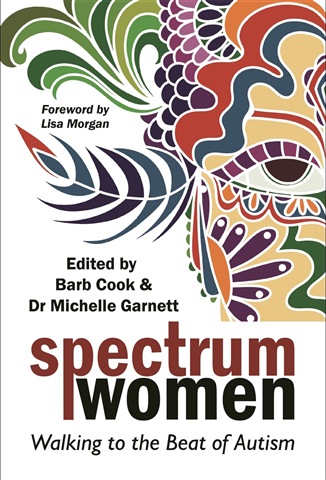
  • If you are a woman I can recommend this book which features accounts by autistic women and comments on the accounts by professionals in the field. 

    Another book that I found validating some months after diagnosis is this one, also from Jessica Kingsley Press. The site is useful because they publish many books on autism, ADHD etc.

    https://uk.jkp.com/products/the-female-profile-of-autism?_pos=1&_psq=the+female&_ss=e&_v=1.0

  • I can recomend Gina Rippon's books, The Gendered Brain and The Lost Girls of Autism, they're both more at the scientific end rather than personal experience ones. But I think that The Lost Girls of Autism, gives a much better understanding of how autism differs in some women and some men too.

  • I’m looking for book recommendations that could help me understand and support my autistic family members better

    I would start with a book that is easy to access and you can dip in and out as you pick up knowledge:

    Autism For Dummies (2025) - ISBN 9781394301003 (paberback); ISBN 9781394301027 (ebook)

    There are other books focussed on specific members like chidren, partners etc

    Loving someone with Asperger's syndrome_ understanding & connecting with your partner - Ariel, Cindy N (2012)
    ISBN 9781608820771

    The Other Half of Asperger Syndrome - Maxine Aston (2013)
    ISBN 9781849054980

    Women and Girls with Autism Spectrum Disorder, Understanding Life Experiences from Early Childhood to Old Age - Sarah Hendrickx, Judith Gould (2015)
    ISBN 9781849055475

    Families of Adults With Autism_ Stories and Advice for the Next Generation- Jane Johnson & Anne Van Rensselarer - 2008

    There are literally hundreds of books on the subject of autism and many of specific aspects but the above is a good starting point.

    Note that Aspergers Syndrome was the name used for "high functioning autism" up until 2013.

  • If you want to get a feeling for whether you may be, try some of the questionaires.

    The AQ-50, with 50 questions, us the main autism one. If you score low, 15 or so is typical I think, then you aren't. It is good at screening people out. If you score over 30 then it is possible. Only formal assessment can confirm it. There are other tests too, with various predictive accuracies.

    Note you have to be negatively impacted to be diagnosed. If you in a supportive environment you may not have too many challenges. So you could have lots of traits and not be formally diagnosed.

    The easiest single site for them is embrace-autism.com

    Everyone is different although there are lots of overlaps. I got most of the info from reading websites and watching autistic YouTube channels. Looking at suggested accommodations also gave an idea of what some of the real world challenges are, like not liking getting wet, sleep problems, digestive issues, trouble with noisy places and crowds, rumination, burnout, etc.

  • Good morning Rooster001!

    I’ll have to think about whether I have a good suggestion about books, since a lot of the books I’ve read were written specifically with Autistic readers in mind. My go-to book to recommend is a self-care book, which helps with Autistic individuals to communicate with others, but I’m not sure if it could help with the opposite? Oh well, it’s “Self-Care for Autistic People” by Dr. Megan Neff. It’s a really easy read. At the very least, it can help you to understand what your family needs in order to function socially, professionally, and etc.

    I’m also starting to wonder whether I might be on the spectrum myself.

    Interesting! It is definitely a possibility since so many of your family members are. One thing I’ve read though is that oftentimes neurotypical family members “adopt” an Autistic lifestyle to better accommodate their ND family. Ex. you might avoid loud environments because you are used to avoiding them for your parents’ sake. However, if you find yourself relating more and more to neurodiversity, then it might be something worth digging deeper into. I’m always a big fan of understanding yourself more.