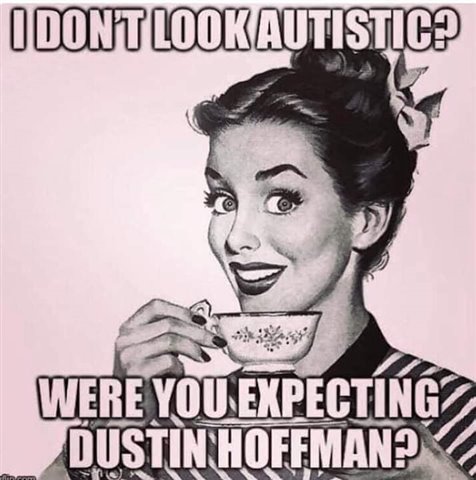
Imposter syndrome and Surprised responses

Since being diagnosed as autistic as an adult ( last week) I am suffering with imposter syndrome. I immediately felt relief after the diagnosis and felt a weight had been lifted, so I wanted to tell everyone. However, many people were surprised and have said things like, ' wow, you can't tell,' and 'you're really good at masking.' This just consolidates my fear that I'm a fraud.  I don't know how to respond to it. I haven't been consciously masking. I've just been surviving in the only way I knew how to. I wasn't prepared for the questions that have followed, 'what are your symptoms?' 'what makes you autistic?' I feel like they're asking me what colour underwear I'm wearing!! 

How do people respond to/ deal with this? I feel I'm suddenly off script and I don't have the answers or an explanation. 

Parents
  • Hi Merida, welcome to the community. I understand how you feel.

    If people ask what your "symptoms" are, you could try telling them that it's not a disease, it's a condition that means your brain works a little differently to the majority of the population. In reply to "what makes you autistic?" You could give them a list of the things that you struggle with, but you could also tell them what positive traits autistic people have, such as: deep focus  attention to detail, good observational skills, in depth knowledge of topics, creative thinking, resilience, and integrity. 

    I hope you find this forum useful and enjoy chatting with us.

  • And on a lighter note - if it's work colleagues saying you "don't look autistic" , you could always print off this meme and stick it on the wall:

  • I love this too. It’s raw going through the assessment process. Having to then justify and explain to others is similar to coming out as gay. There has been progress but maybe one day people will just be accepted.

Reply Children
No Data