Common advice is to build connection with other ND people. How?

Little grumble here, but a lot of people say I should try to find more neurodiverse people so socialise with, but how do I do this? It's nice chatting in online communities but it's not the same as real life connections. A social group of likeminded people would be amazing, but there's nothing where I live, it's all aimed at children or adults with learning disabilities. I would love to meet other late diagnosed, highly masking adults who can help each other to unmask. Something simple like a coffee or summer meet ups in parks, but nothing. There's such a gap in the 'market' or whatever you'd call it. Shame really, because a common question for many people who are trying to unmask seems to be, where can I meet likeminded people?

Parents
  • Just for info :)

    This is slightly ironic - being pedantic is a common autistic trait and one that annoys a lot of NTs (I have had my fair share of pushbacks from this very trait) so is a good example of one not to use in a social environment if you can prevent yourself.

    I'm not having a go at Bunny but wanted to use this as a teaching moment on a thread about building connections as it is something to avoid as it makes you seem slightly hostile in the social group.

    I guess it will involve masking to stop yourself from being authentic and correcting others and this is not always easy to do.

    All that said, the point is entirely correct.

  • Dear Iain,

    We would like to remind you of rule 7: Rule 7: Be respectful in discussions. Disagreements are fine, but personal attacks and insults are not. Swearing is not allowed. Please respect other viewpoints and avoid taking sides in arguments. Comments can be misinterpreted, and posts may come from users who are anxious or distressed. If something upsets you, take a break before responding. 

    Kind Regards,

    Rosie Mod

  • Hello Rosie, the original poster was asking for advice on how to build connections with others and I pointed out that the fairly common autistic trait of pedantry is one that actively works against building the connection.

    I even pointed out that I share the trait so I see none of the criteria having been met of personal attack, insult or sewaring.

    Does it highlight a common failing - yes. It is exactly this that we can learn from.

    This is also an example of pedantry in action in case you missed the irony here too.

    In respect of this thread and the warning that you received:

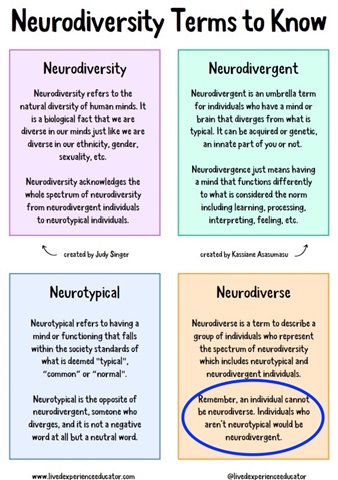
    1. You declared that I’d been pedantic. I disagree. My intention was to politely and respectfully offer clarification about important terminology. In my view, the more that we (ie you, me, and the rest of our autistic community) can pull together to build and foster a common awareness and understanding of the terms that surround autism, the better. 

    When referring to any aspect of the neurodiversity paradigm, I see it as being vitally important - both for our own benefit, and in building awareness among the general public - that it is explained and referred to as accurately as possible. This can also help to avoid basic misunderstandings when communicating between ourselves.

    I don't regard this as being remotely pedantic.

    2. Not only did you decide that I’d been pedantic, you then a) singled me out for it, and b) used my comment - patronisingly and condescendingly - as the basis for a “teaching moment” (sic).

    From my perspective, as the offended party, that was presumptuous, judgemental and disrespectful of you - and fully merited you being reminded of the rules by a moderator.

    Again from my point of view, the best response that you could have posted would have been something along the lines of “I’m sorry, I didn’t realise that what I’d posted was disrespectful. Bunny, please also accept my apologies”.

    Instead, you followed what I’ve unfortunately found to be a consistent pattern in how you react to situations where you have been held to account for your comments. 

    In this particular case, you’ve repeated the harm [and yes, I do feel harmed] by a) completely failing to take the point that Rosie Mod made, and b) patronisingly reiterating your opinion and causing further offence. As a result, you not only doubled down on your disrespect towards me, but were also disrespectful towards Rosie Mod.

    You followed a similar pattern in another of our recent exchanges here. To summarise, you posted a new thread in which you claimed that a lawsuit settlement “confirmed” your suspicious that your phone was being used illicitly to gather and sell information to advertisers.

    I replied - politely and respectfully - to make the factual and objective observation that the article and the events reported in it didn’t, in fact, prove or confirm anything. 

    Your response again had close similarities with DARVO, a strategy that’s often used by bullies: Deny, Attack, Reverse the roles of Victim and Offender (including in order to mislead and garner undue sympathy from others).

    You attacked me personally and disrespectfully, including saying that I was “naive in the extreme” for not believing that the events constituted proof.

    I told you that you had caused offence. Your response was, again, to double-down on your disrespectful comment by repeating the inappropriate, personal allegation that I was naive. (Deny and Attack tactics again). 

    Here’s an example of how you could have replied in a way that was respectful and reflected what I’d actually said, rather than what you’d decided I believed:

    “I’m sorry - you’re quite right. What I meant was that, for me, the article strengthened my previous suspicions”.

    There was no need to re-project what you’d decided I believed, or to personally ridicule me for it - not just once, but twice, and with the second time being when you already knew that I’d been upset by your first allegation.

    You also did it again recently, in a third thread. You’d offered a completely speculative medical opinion about the nature of a person’s actions (tantrums vs meltdowns). You based this on a claimed fact (the episodes being short in nature) that didn’t exist anywhere in the OP’s post. I pointed this out in passing when replying myself to the OP, which I did in order to clarify that, even if the episodes were short, they could still be meltdowns. I supported this with a link to a second article about meltdowns (supplementing the article that I linked to in my first reply), which substantiated my point.

    Your response was not to apologise, or to acknowledge that you’d based a speculative suggestion on invented evidence. Instead it was, again, to attack me. On that occasion by demanding to know my “credentials” (which you’ve also done previously).

    What you’re doing repeatedly - whether intentionally or otherwise - is bullying me. And I know, including from another recent thread, that I’m not the first person to have felt that way. 

    I recall from a separate, previous conversation that you refused to offer an apology to the OP unless they personally told you that you’d upset them. Out of politeness, many people who have been offended might deny the fact, if asked by the person who’d offended them. For example, it can feel less awkward or embarrassing for someone to just brush off an offensive comment and move on, rather than - for example - to draw further attention to it, or get into a protracted and awkward exchange with you. 

    By way of a tip for your social toolkit, the respectful thing to do is to offer an apology immediately upon realising or being made aware that you have - or could reasonably have - caused offence. To refuse to do so, or to just double down on your original comment, causes unnecessary and unhelpful upset. 

    I’m not going to try and play amateur psychologist here. But, in deciding whether to just quit the forum or to try and address these issues, I have needed to consider potential bases of your reasoning in order to consider how to respond to what you keep doing. 

    For example, I could choose to view you as doing such things willingly and with malicious intent. Or I could choose to view you as being unaware of the impacts of what you say and how you say it. Honestly, I struggle somewhat with the latter. Especially given how often you’ve spoken here about having developed and refined a social toolkit / social skills, including expressing confusion about why other autistic people don’t, as you put it, seem able to learn and use them.

    This reply, though, is offered on the basis that you might not have malicious intent.

    This is absolutely not, by the way, a question of me thinking that I always know best, or that my opinions are always correct. The opposite, in fact, applies. One of the biggest shocks to me, as I learned more about autism, was the realisation that my thinking has previously been - and will always be prone to being - blinkered / black and white to an extent that I would never otherwise have comprehended. My self confidence and self esteem are the lowest they’ve ever been. I now make extra effort to be mindful of, and to acknowledge, when I could be wrong. 

    Partly as a result of all of this, I typically try to help people here by signposting them to trusted third-party sources of information, advice, and guidance. I very intentionally do this rather than, for example, assuming that my own life experiences qualify me to draw broad brush conclusions about things that have not been an area of professional specialism for me, about things that I’m not educated about, or about others’ capabilities and/or what will work best for them, including due to their own unique differences and difficulties.

    I’m still at an early stage of building my confidence to be more open and participate more broadly here. There are topics that I’d like to post about, and ask advice about. 

    But I don’t, largely because I’m worried that you’ll reply with more patronising or condescending comments, which will leave me far more upset than any benefit that I might gain from others’ contributions. Or that you’ll bully me again, the next time that I - for example - politely point out what I believe to be any important factual discrepancies, that are key to the conversation. Or should my view again differ from your own, strongly held view. Or should you again simply decide, on my behalf, what I'm thinking and ridicule me for it.

    The easiest option for me, in order to protect my mental health, would be to leave the forum completely. It should not be necessary for me to have to endure personally targeted disrespect as a result of - for example - my efforts to help others and/or engage in factually-based debates. Or to feel fearful about being more open about my issues and seeking help from others. That’s an extremely disappointing place to find myself in. So I am posting this as a final effort, with constructive and respectful intent, in the hope that you will, in future, be more considerate about whether and how you reply to me.

Reply
  • Hello Rosie, the original poster was asking for advice on how to build connections with others and I pointed out that the fairly common autistic trait of pedantry is one that actively works against building the connection.

    I even pointed out that I share the trait so I see none of the criteria having been met of personal attack, insult or sewaring.

    Does it highlight a common failing - yes. It is exactly this that we can learn from.

    This is also an example of pedantry in action in case you missed the irony here too.

    In respect of this thread and the warning that you received:

    1. You declared that I’d been pedantic. I disagree. My intention was to politely and respectfully offer clarification about important terminology. In my view, the more that we (ie you, me, and the rest of our autistic community) can pull together to build and foster a common awareness and understanding of the terms that surround autism, the better. 

    When referring to any aspect of the neurodiversity paradigm, I see it as being vitally important - both for our own benefit, and in building awareness among the general public - that it is explained and referred to as accurately as possible. This can also help to avoid basic misunderstandings when communicating between ourselves.

    I don't regard this as being remotely pedantic.

    2. Not only did you decide that I’d been pedantic, you then a) singled me out for it, and b) used my comment - patronisingly and condescendingly - as the basis for a “teaching moment” (sic).

    From my perspective, as the offended party, that was presumptuous, judgemental and disrespectful of you - and fully merited you being reminded of the rules by a moderator.

    Again from my point of view, the best response that you could have posted would have been something along the lines of “I’m sorry, I didn’t realise that what I’d posted was disrespectful. Bunny, please also accept my apologies”.

    Instead, you followed what I’ve unfortunately found to be a consistent pattern in how you react to situations where you have been held to account for your comments. 

    In this particular case, you’ve repeated the harm [and yes, I do feel harmed] by a) completely failing to take the point that Rosie Mod made, and b) patronisingly reiterating your opinion and causing further offence. As a result, you not only doubled down on your disrespect towards me, but were also disrespectful towards Rosie Mod.

    You followed a similar pattern in another of our recent exchanges here. To summarise, you posted a new thread in which you claimed that a lawsuit settlement “confirmed” your suspicious that your phone was being used illicitly to gather and sell information to advertisers.

    I replied - politely and respectfully - to make the factual and objective observation that the article and the events reported in it didn’t, in fact, prove or confirm anything. 

    Your response again had close similarities with DARVO, a strategy that’s often used by bullies: Deny, Attack, Reverse the roles of Victim and Offender (including in order to mislead and garner undue sympathy from others).

    You attacked me personally and disrespectfully, including saying that I was “naive in the extreme” for not believing that the events constituted proof.

    I told you that you had caused offence. Your response was, again, to double-down on your disrespectful comment by repeating the inappropriate, personal allegation that I was naive. (Deny and Attack tactics again). 

    Here’s an example of how you could have replied in a way that was respectful and reflected what I’d actually said, rather than what you’d decided I believed:

    “I’m sorry - you’re quite right. What I meant was that, for me, the article strengthened my previous suspicions”.

    There was no need to re-project what you’d decided I believed, or to personally ridicule me for it - not just once, but twice, and with the second time being when you already knew that I’d been upset by your first allegation.

    You also did it again recently, in a third thread. You’d offered a completely speculative medical opinion about the nature of a person’s actions (tantrums vs meltdowns). You based this on a claimed fact (the episodes being short in nature) that didn’t exist anywhere in the OP’s post. I pointed this out in passing when replying myself to the OP, which I did in order to clarify that, even if the episodes were short, they could still be meltdowns. I supported this with a link to a second article about meltdowns (supplementing the article that I linked to in my first reply), which substantiated my point.

    Your response was not to apologise, or to acknowledge that you’d based a speculative suggestion on invented evidence. Instead it was, again, to attack me. On that occasion by demanding to know my “credentials” (which you’ve also done previously).

    What you’re doing repeatedly - whether intentionally or otherwise - is bullying me. And I know, including from another recent thread, that I’m not the first person to have felt that way. 

    I recall from a separate, previous conversation that you refused to offer an apology to the OP unless they personally told you that you’d upset them. Out of politeness, many people who have been offended might deny the fact, if asked by the person who’d offended them. For example, it can feel less awkward or embarrassing for someone to just brush off an offensive comment and move on, rather than - for example - to draw further attention to it, or get into a protracted and awkward exchange with you. 

    By way of a tip for your social toolkit, the respectful thing to do is to offer an apology immediately upon realising or being made aware that you have - or could reasonably have - caused offence. To refuse to do so, or to just double down on your original comment, causes unnecessary and unhelpful upset. 

    I’m not going to try and play amateur psychologist here. But, in deciding whether to just quit the forum or to try and address these issues, I have needed to consider potential bases of your reasoning in order to consider how to respond to what you keep doing. 

    For example, I could choose to view you as doing such things willingly and with malicious intent. Or I could choose to view you as being unaware of the impacts of what you say and how you say it. Honestly, I struggle somewhat with the latter. Especially given how often you’ve spoken here about having developed and refined a social toolkit / social skills, including expressing confusion about why other autistic people don’t, as you put it, seem able to learn and use them.

    This reply, though, is offered on the basis that you might not have malicious intent.

    This is absolutely not, by the way, a question of me thinking that I always know best, or that my opinions are always correct. The opposite, in fact, applies. One of the biggest shocks to me, as I learned more about autism, was the realisation that my thinking has previously been - and will always be prone to being - blinkered / black and white to an extent that I would never otherwise have comprehended. My self confidence and self esteem are the lowest they’ve ever been. I now make extra effort to be mindful of, and to acknowledge, when I could be wrong. 

    Partly as a result of all of this, I typically try to help people here by signposting them to trusted third-party sources of information, advice, and guidance. I very intentionally do this rather than, for example, assuming that my own life experiences qualify me to draw broad brush conclusions about things that have not been an area of professional specialism for me, about things that I’m not educated about, or about others’ capabilities and/or what will work best for them, including due to their own unique differences and difficulties.

    I’m still at an early stage of building my confidence to be more open and participate more broadly here. There are topics that I’d like to post about, and ask advice about. 

    But I don’t, largely because I’m worried that you’ll reply with more patronising or condescending comments, which will leave me far more upset than any benefit that I might gain from others’ contributions. Or that you’ll bully me again, the next time that I - for example - politely point out what I believe to be any important factual discrepancies, that are key to the conversation. Or should my view again differ from your own, strongly held view. Or should you again simply decide, on my behalf, what I'm thinking and ridicule me for it.

    The easiest option for me, in order to protect my mental health, would be to leave the forum completely. It should not be necessary for me to have to endure personally targeted disrespect as a result of - for example - my efforts to help others and/or engage in factually-based debates. Or to feel fearful about being more open about my issues and seeking help from others. That’s an extremely disappointing place to find myself in. So I am posting this as a final effort, with constructive and respectful intent, in the hope that you will, in future, be more considerate about whether and how you reply to me.

Children
No Data