Not sure where to start

Hello! I was recently, within the last couple of days, told by my therapist that she suspects I may be autistic. I am a 21-year-old female in college, and for context, I was in therapy for a high level of anxiety. I have never considered this possibility, but in speaking with her and doing my own research, things sort of clicked. I am struggling with what to do next. I'm debating moving forward with getting a diagnosis. Does anyone have some pros and cons of diagnosis? Part of me wants to know for sure, but another part of me thinks it shouldn't matter. Any thoughts or help is welcome! Thank you!

  • I am currently waiting for my assessment and reading you has given me so much hope... People around me don't really understand why I want to get a diagnosis and also why I am so sacred of going back to work, particularly without a diagnosis. So thank you for those words and for explaining your experience.

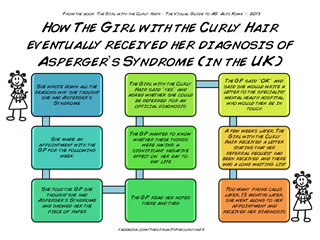
  • heres the overall plan of what u do

    Make a list of reasons why u think u are autistic.

    include blood relatives in your family who are autistic or adhd or called weird/different

    and a list of occasions when u have been called weird, autistic, different

    the list should be electronic ie so you can email it to anyone who wants it.

  • Speaking from personal experience (diagnosed at 46) I've found it to be a huge help. I've had years (decades!) of suffering from anxiety and depression and what's helped me is knowing I'm on the spectrum and applying autism-specific strategies to managing my day to day activities. I'm recognising just how much I need to build in "buffer-time", manage information so I don't get overloaded, limit my exposure to certain personality types, check-in with myself with a mood chart to build emotional understanding - the list goes on. Without the diagnosis I'd have been on the endless merry go-round of work-burnout-depression-meds-counselling-return to work.

    By having it "official" it also gives me access to various legal protections and adjustments which I personally think is essential in the workplace or in any kind of study. To give a couple of examples -  I've more confidence dealing with work colleagues - so if I ask for the background to something it's recognised that I'm not being difficult or obsessive - it just helps me to process information about a task or things I'm being asked to do. I can safely disengage from situations that are draining - and people will understand that I'm not just "ducking out" - without forcing myself to sit through them and head down the route of an overload or meltdown. 

    I can't think of any cons with the diagnosis - other than the build up to the assessment can be a little stressful and the assessment itself can be unsettling. In terms of how I've been able to make sense of my own life and my outlook on things it's been invaluable, not only from a self-management viewpoint but also becoming part of a community and being able to share and recognise experiences in others (listening the other day to how someone struggled with the contrast between artificial lights and darkness in winter had me whoop with excitement - anyone would have thought I'd won the lottery Grinning).

    Diagnosis can be a lengthy process. Takes an age on the NHS, private is faster but can be expensive. If you're at college there may be path for assessment for you - if so, I'd suggest taking advantage of it.  Having said that, some are happy with self-diagnosis. Personally I needed something from someone who was qualified to assess it- not only for work adjustment reasons but also to give me some perspective on my personal history.

    Best of luck in whatever you decide. 

  • Hi, for me I think it possible that undiagnosed ASD might have been interfering with my care for other issues. For that reason alone I have to know.

    Well done to your therapist for picking that up. So many don't. There might be all sorts of personal pros and cons for you, but do you think it could put a different slant on how your anxiety is managed? 

  • Hey I was in the same position as you a few months ago the only real difference was I found out on my own I then pursued a formal diagnosis and got one confirming im autistic.

    I felt very alone my whole life never fitting in and knowing that I'm different from everyone else but never knowing why. Therefore I've basically had an identity problem because I never knew how to fit myself into different social groups and society in general. For me a formal diagnosis has made me feel so much better about myself in that respect I now know that there isn't anything wrong with me I'm just different and my struggles and difficulties are not made up in my head as I've been told many times in my life they are valid and real and now I know why. I still have a LOT of questions about my self it's made me reevaluate my life but in good way I can look back  at situations in my life and know that I wasn't just stupid.

    I kind of understand what you mean when you say it shouldn't matter I wish it shouldn't too but at the end of the day us autistics are not living in a world built for us and at the very least a formal diagnosis would give you access to certain forms of help should you ever find your self in a situations where you need extra money from the government or certain therapies etc.

    If I were you I'd do a more research try and learn as much as you can about autism in adults if you're like me you'll only ever end up relating to what you read, see and listen too and you'll more than likely make a more concrete decision as to whether or not you want a formal diagnosis. I felt like I wanted one purely because I wanted the validation I needed for a long time to confirm my suspicions from someone who is qualified.

    I can go on forever and ever in the post so feel free to message me if you have questions I'll try and answer them as best I can.

  • hey how are you im matthew i know how hard and scary things can get and be feel free to message me if you like im ging through similiar