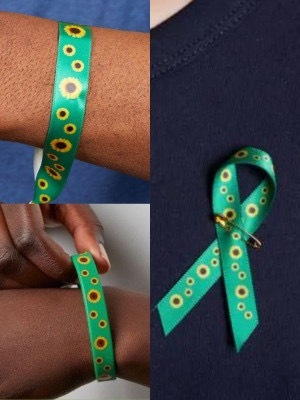
Sunflower lanyard

Have you used one? If so, do you find people you show it to take notice?

I'm thinking of getting one but want to know if it's worthwhile. If it is, is it better to get one with a photo and personalised icons? I'd love something that might help in environments with too much light/noise.

  • That is shocking B. I’m so sorry. 

    I know of several cases similar to yours and they have made me reticent about wearing identifying lanyards, badges, lanyards or wristbands. 

  • I'm sorry you had such a disappointing experience with that nurse. The scheme is officially supported by some NHS trusts, including mine. Perhaps it hasn't been, yet, in yours? Or the nurse hadn't receiving training? The doctors sound appalling! Scream [horror / scream]

    I think an experience like that is one that I'd personally enjoy (as a form of advocacy) sending some strong feedback about, in one of the seemingly endless number of surveys that I keep getting asked to complete, after my appointments! (To be clear, by the way, that's NOT me trying to imply or suggest that you should have done that).

    This is an example of how one NHS Trust describes what to expect from its membership:

    "Our trust is a member of the Hidden Disabilities Sunflower scheme.

    Introduced by our Disability Staff Network and Equality, Diversity and Inclusion team, the Sunflower scheme enables patients with a non-visible (hidden) disability to collect a free Sunflower lanyard or badge from PALS in the Main Atrium at Queen Alexandra Hospital.

    Wearing a Sunflower lanyard or badge is a discreet way for patients to indicate that they may need additional support, understanding, or more time during their visit. Staff who see the Sunflower symbol are encouraged to offer help in a respectful and considerate way."

    Portsmouth Hospitals University NHS Trust - Hidden Disabilities Sunflower

    I'd like to think that most people who are aware of the scheme consider it most polite not to ask what, specifically, it relates to (unless needed, of course). And perhaps also to avoid making a big deal of having seen it, but instead just focus on making an extra effort to be compassionate, patient, and understanding.

    I'm glad and relieved to say that I've had the opposite personal experience - including being complimented on my ribbon badge as a lovely alternative option to the lanyard (showing me they knew exactly what it was), and being offered help by a stranger in the lobby of a hospital that was new to me, as I arrived and stopped in the middle, looking confused. I feel sure that's because I was wearing my lanyard, and he'd recognised it. He'd already made it to the doors on his way out, but turned around and came back inside to offer to help me. I was shocked, but in such a nice way. As far as I know, he wasn't even a staff member.

  • I have one and wear it for medical procedures at the hospital.

    If so, do you find people you show it to take notice?

    That's not my experience.

    Even when wearing it is rare (once) to be asked what it's for and that's only because the nurse asked me if I worked at the hospital as part of a group with similar lanyards.

    When I explained that this wasn't the case (and had to explain to her that it's for invisible disabilities - ie the sunflower) she later asked me what my disability is, even though I'd written it on the medical form that she had read.

    I've had these responses from doctors when I volunteered my diagnosis, not because they noticed my lanyard:

    'You don't look autistic' 

    and 

    'your autism must be mild'.

    I've had 2 people talking to me at the same time whilst on the bed for an endoscopy and had to shout at them for one of them to shut up and point out that I'm autistic.

    Sorry, I despair, and held off sharing this, but it's my real NHS experience.

  • I don’t have a Sunflower lanyard but I’m not ruling out getting one in the future.

    To an extent, I agree with CatWoman about the number of different lanyards for different things render them meaningless in some circumstances, but I do think that many organisations are aware and it is recognised in other countries.

    A digital ID card on my iPhone would be more useful to me as it could be amended easily and I could choose to withhold specific details when showing the card to different organisations. It would more easily allow me to control my information. I would feel more confident if not everyone knew I was vulnerable.

    Autism ID cards are available from a few different organisations including:

    https://www.npaa.org.uk/alert-card-schemes/

    https://www.autism.org.uk/shop/products/merchandise/alert-card

    https://arghscotland.org/argh-autism-alert-card/

    In Ireland:

    https://autismni.org/help-support/resources/autism-card

    https://asiam.ie/what-we-do/asiam-autism-id-card

    For travelling through Dublin Airport the Sunflower lanyard is recognised and there is the Important Flyer Scheme.

    https://www.dublinairport.com/accessibility/autism-non-visible-disabilities

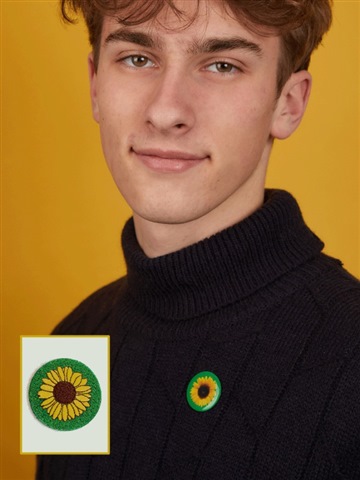
  • I chose to get a photo card with personalised icons. I also have the rubber wristband, ribbon badge, and enamel badge. I vary which I wear depending on where I'm going, and what clothes I'm wearing. As a minimum, I always wear the wristband when away from home. For GP visits, I wear the ribbon badge. For hospital appointments and on some other rare outings, I wear the lanyard.

    People definitely do notice my lanyard and badges (without me needing to draw attention to them). After becoming aware of the scheme myself, I've noticed the wristband on others, so feel confident that those who've been trained about it also spot and recognise it.

    I do prefer to use the scheme's products rather than copycat versions. I want to support it, and also to help build awareness and recognition of the official scheme:

    Hidden Disabilities - Shop > All wearer products


  • I have had one for years and attached a autism alert card which I find helps me explain when requesting help. I know shop staff are trained to spot the lanyard as are rail staff and this has helped me out on so many occasions. Failing that, I have some amusing autism T shirts which are useful too and make people laugh so wear them a lot as well.   

  •  I did get a sunflower card in a wallet and used it around COVID in 2020 a bit for being extremely vulnerable. I have since lost it and this thread made me order another one with no condition on it. I think it may be handy to have. I have since been diagnosed as autistic formally-although I self identified back then in 2020 because the NHS tested me and treated me as such in 2015.

    I will add that I find the Nimbus card helpful-I just rang a theatre and they asked if I had this card and got my seat like half price alone.

    I get in airports special assistance so don't need a lanyard then. Although, I could still wear it to.

    I may get a little brooch has been mentioned as I like that it is discreet.

  • I don't, I think there are so many lanyards for so many different things, they've become meaning less

  • The assistants are pretty good in supermarkets but I think now more people are wearing them they are becoming less noticeable. I have a small sunflower brooch pinned to my hat. It might be better to try a supermarket lanyard before getting one personalised. You might feel too exposed with the latter, so maybe try the free one first.

  • I find some people treat you better with them I need a new one my self 

    Not sure if gwt a photo on it in case I lose  it but putting g your needs on there may help